More About This Card
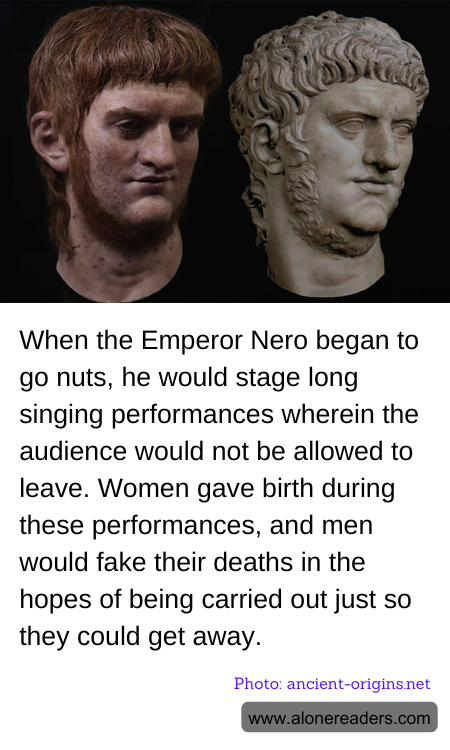
The reign of Emperor Nero, one of Rome's most infamous leaders, is often remembered for its extravagance and eccentricity. Among the many tales of his rule, one of the most peculiar involves his penchant for staging lengthy singing performances, which became a notorious aspect of his descent into madness.
Nero, who ruled from 54 to 68 AD, was known for his love of the arts, particularly music and theater. He fancied himself a talented performer and often subjected his subjects to his musical endeavors. These performances were not merely casual affairs; they were grand spectacles that could last for hours on end. Attendance was mandatory for many, and leaving before the performance concluded was strictly forbidden.
The emperor's insistence on holding his audience captive led to some rather bizarre and desperate measures by those in attendance. Historical accounts suggest that women, unable to leave, sometimes gave birth during these marathon performances. The situation was equally dire for men, some of whom resorted to feigning death in the hope of being carried out, thus escaping the interminable ordeal.
Nero's obsession with his own artistic talents was symptomatic of a broader pattern of erratic behavior that characterized his later years. His reign, initially marked by relative stability, gradually descended into tyranny and excess. The emperor's fixation on his performances was not merely a quirk but a reflection of his growing detachment from reality and the responsibilities of leadership.
The forced attendance at these performances was emblematic of Nero's authoritarian rule, where personal whims often took precedence over the welfare of his people. It is said that his advisors and courtiers, fearing his wrath, dared not criticize his performances, no matter how interminable or insufferable they might have been.
Nero's reign eventually came to a tumultuous end, marked by rebellion and his subsequent suicide in 68 AD. His legacy, however, endures as a cautionary tale of the dangers of unchecked power and the perils of a ruler more concerned with personal indulgence than governance.
These stories of Nero's performances, while perhaps exaggerated over time, offer a glimpse into the peculiarities of his rule and the lengths to which people will go to escape an unbearable situation. They serve as a reminder of the importance of balance and humility in leadership, qualities that Nero, in his quest for artistic immortality, tragically lacked.