More About This Card
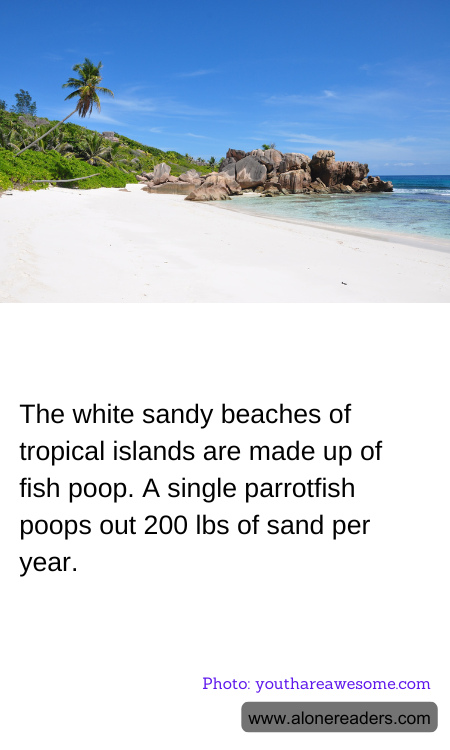
When we think of tropical islands, images of pristine white sandy beaches often come to mind. These idyllic scenes are the stuff of postcards and vacation dreams. However, what many people don't realize is that these beautiful beaches owe much of their existence to an unexpected source: fish poop. More specifically, the sandy shores are largely composed of the excretions of parrotfish, a colorful and fascinating marine species.
Parrotfish are named for their beak-like mouths, which resemble a parrot's beak. These specialized mouths allow them to scrape algae off coral reefs, which is their primary food source. As they feed, parrotfish inadvertently consume bits of coral. Inside their digestive systems, the coral is ground down and eventually excreted as fine sand. This process is not only essential for the fish's survival but also plays a crucial role in the creation and maintenance of tropical beaches.
A single parrotfish can produce up to 200 pounds of sand each year. Multiply this by the thousands of parrotfish inhabiting coral reefs around the world, and it's easy to see how significant their contribution is to the formation of sandy beaches. The sand produced by parrotfish is not only abundant but also exceptionally fine and white, contributing to the stunning appearance of tropical coastlines.
Beyond their role as natural sand producers, parrotfish are vital to the health of coral reefs. By feeding on algae, they prevent it from overgrowing and suffocating the coral. This symbiotic relationship ensures that coral reefs remain vibrant and healthy, supporting a diverse range of marine life. In turn, healthy reefs provide a continuous supply of coral for parrotfish to consume, perpetuating the cycle of sand production.
Understanding the connection between parrotfish and sandy beaches highlights the intricate balance of marine ecosystems. It also underscores the importance of protecting these environments from threats such as overfishing, pollution, and climate change. By preserving the habitats of parrotfish and other reef-dwelling species, we ensure the continued existence of the beautiful beaches that draw millions of visitors each year.
Next time you find yourself strolling along a tropical beach, take a moment to appreciate the hidden work of parrotfish beneath your feet. These unassuming creatures are the unsung architects of paradise, tirelessly crafting the very sand that makes these islands so enchanting. Their contribution is a reminder of the interconnectedness of nature and the surprising ways in which life on Earth is sustained.