More About This Card
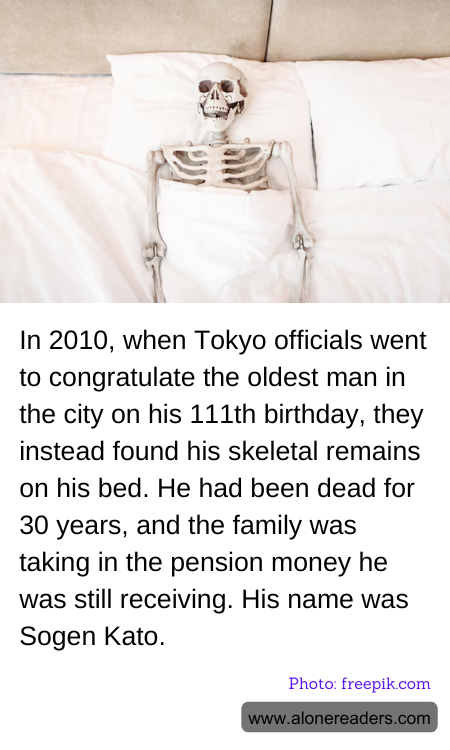
In 2010, a startling discovery in Tokyo sent shockwaves through Japan and beyond, highlighting a troubling issue within the country's aging society. Officials in Tokyo, eager to celebrate the 111th birthday of Sogen Kato, believed to be the city's oldest living man, were met with an unexpected and grim reality. Instead of a joyous celebration, they found Kato's skeletal remains lying in his bed, revealing a tragic secret that had been hidden for decades.
Sogen Kato had passed away approximately 30 years prior, yet his death had gone unreported. During this time, his family continued to collect his pension, a financial benefit intended for the elderly to support their twilight years. The discovery of Kato's remains not only shocked the nation but also raised serious questions about the integrity of social welfare systems and the societal pressures that may lead families to such desperate measures.
The case of Sogen Kato brought to light the phenomenon of "kodokushi," or "lonely death," a term used in Japan to describe individuals who die alone and remain undiscovered for extended periods. This issue is particularly prevalent in Japan, a country with one of the world's highest life expectancies and a rapidly aging population. The incident underscored the need for better community support systems and more robust checks on the welfare of elderly citizens.
In the aftermath of this revelation, Japanese authorities launched a nationwide investigation to ensure the well-being of the country's senior citizens. The government also took steps to tighten the monitoring of pension distributions and improve the verification processes for the living status of beneficiaries. These measures aimed to prevent similar incidents and ensure that financial support reaches those who genuinely need it.
The story of Sogen Kato serves as a poignant reminder of the challenges faced by aging societies worldwide. It highlights the importance of maintaining strong community ties and the need for vigilance in caring for the elderly. As Japan continues to grapple with its demographic challenges, the lessons learned from this case remain relevant, urging society to prioritize the dignity and well-being of its senior members.
Ultimately, the case of Sogen Kato is a call to action for governments, communities, and families to work together to create a more compassionate and supportive environment for the elderly. By addressing the root causes of such tragedies, societies can ensure that their oldest members live their final years with the respect and care they deserve.