More About This Card
In the annals of military history, the Gatling gun stands as a significant innovation, marking a pivotal shift in the nature of warfare. Interestingly, this formidable weapon was invented not by a military engineer or a seasoned soldier, but by a doctor named Richard Jordan Gatling. His journey from medicine to weaponry is a fascinating tale of unintended consequences and the complex interplay between technology and human life.
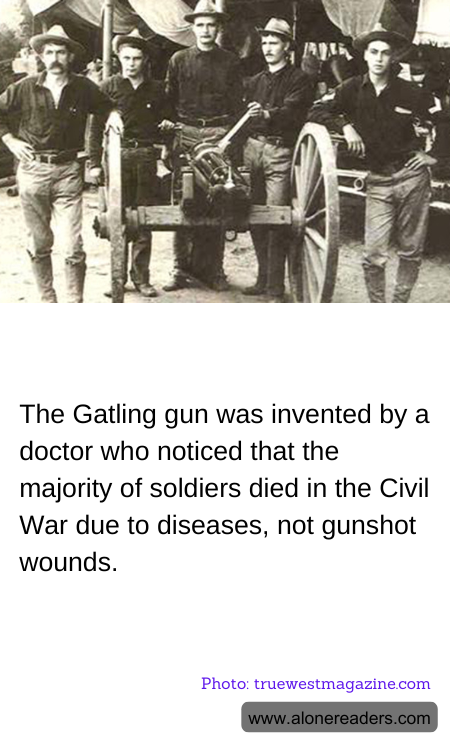
Richard Gatling was born in 1818 in North Carolina, and his early career was marked by a keen interest in mechanics and invention. However, it was his medical background that profoundly influenced his most famous creation. During the American Civil War, Gatling observed that the majority of soldier fatalities were not due to gunshot wounds, but rather diseases such as dysentery, typhoid, and pneumonia. This grim reality led him to a paradoxical conclusion: by creating a weapon that could fire multiple rounds rapidly, he believed he could reduce the number of soldiers needed on the battlefield, thereby minimizing the spread of disease.
In 1861, Gatling patented his design for a hand-cranked, multi-barrel firearm capable of firing up to 200 rounds per minute. The Gatling gun was revolutionary for its time, offering unprecedented firepower and reliability. Unlike earlier firearms, which required manual reloading after each shot, the Gatling gun used a rotating barrel mechanism that allowed for continuous firing as long as the operator turned the crank. This innovation was intended to make warfare more efficient and, in Gatling's view, more humane by reducing the overall number of combatants.
Despite Gatling's intentions, the introduction of his gun did not immediately transform military tactics. The Union Army was initially slow to adopt the weapon, and it saw limited use during the Civil War. However, its potential was eventually recognized, and the Gatling gun became a staple of military arsenals in the latter half of the 19th century. It played a significant role in various conflicts, including the Spanish-American War and the British colonial wars, where its devastating firepower was both feared and respected.
The legacy of the Gatling gun is a testament to the dual-edged nature of technological advancement. While Gatling's invention was rooted in a desire to save lives, it ultimately contributed to the development of modern automatic weapons, which have had profound and often destructive impacts on warfare. This dichotomy highlights the complex ethical considerations that accompany technological progress, particularly in the realm of military innovation.
Richard Gatling's story serves as a reminder of the unintended consequences that can arise from even the most well-intentioned inventions. His work underscores the importance of considering the broader implications of technological advancements, especially those that intersect with human life and conflict. As we continue to innovate and develop new technologies, the lessons from Gatling's life and invention remain as relevant as ever.