More About This Card
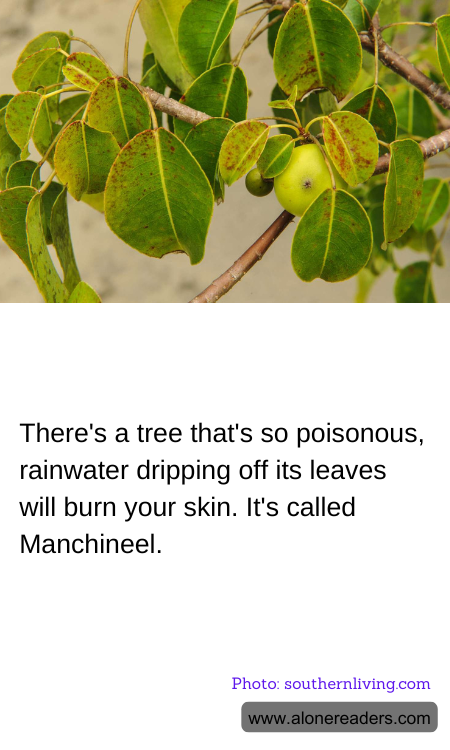
In the lush landscapes of the Caribbean, Central America, and parts of Florida, there exists a tree that stands as a testament to nature's formidable power. Known as the Manchineel tree, or scientifically as Hippomane mancinella, this seemingly innocuous plant harbors a dark secret. It is so toxic that even the rainwater dripping off its leaves can cause severe skin burns.
The Manchineel tree, often referred to as the "tree of death," is a member of the Euphorbiaceae family. It can grow up to 50 feet tall and is often found along coastal beaches and mangroves. Its appearance is deceptively inviting, with glossy green leaves and small, apple-like fruits that emit a sweet scent. However, every part of this tree is laden with potent toxins.
The tree's sap contains a cocktail of toxins, including phorbol, which is known to cause severe skin irritation. When rainwater washes over the leaves, it carries these toxins with it, creating a hazardous situation for anyone seeking shelter beneath its branches. Contact with the sap can lead to blistering, inflammation, and intense pain. Even standing under the tree during a rainstorm can result in skin burns, as the toxic water drips onto unsuspecting individuals.
The fruit of the Manchineel, often called the "little apple of death," is particularly dangerous. Its enticing appearance belies its lethal nature. Consumption of the fruit can lead to severe gastrointestinal issues, including vomiting, diarrhea, and even death. Historical accounts suggest that indigenous peoples used the tree's sap to poison their arrows, and it is rumored that Spanish explorer Juan Ponce de León met his demise due to a Manchineel-tipped arrow.
Despite its perilous nature, the Manchineel tree plays a vital role in its ecosystem. It helps prevent coastal erosion by stabilizing the sand with its roots and provides a habitat for various wildlife species. This duality of danger and ecological importance makes the Manchineel a fascinating subject of study for botanists and ecologists alike.
Efforts to educate the public about the dangers of the Manchineel tree are crucial, especially in areas where it is prevalent. Many regions have taken steps to mark these trees with warning signs, advising people to keep a safe distance. In some places, the trees are painted with a red band to alert passersby of their toxic nature.
In conclusion, the Manchineel tree serves as a stark reminder of the power and unpredictability of nature. While it poses significant risks to humans, it also underscores the importance of respecting and understanding the natural world. By raising awareness and exercising caution, we can coexist with this formidable tree and appreciate the delicate balance it maintains within its environment.