More About This Card
In the vast and diverse world of insects, few stories capture the imagination quite like that of the tree lobster, a creature as intriguing as its name suggests. Officially known as the Lord Howe Island stick insect, this remarkable species is a testament to nature's resilience and the mysteries that still linger in our world. Once thought to be extinct, the tree lobster has made a remarkable comeback, with its only known habitat being the remote and rugged Ball's Pyramid, a towering sea stack located in the Tasman Sea, southeast of Australia.
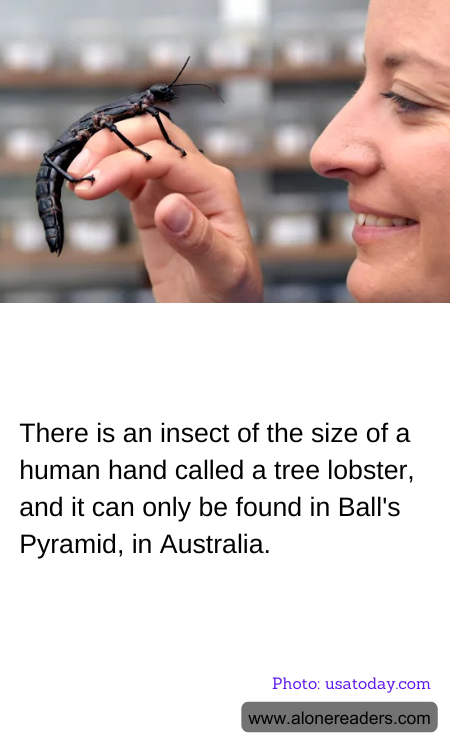
The tree lobster is a giant among insects, growing up to six inches long, roughly the size of a human hand. Its appearance is striking, with a glossy, dark exoskeleton that provides a natural armor against predators. Despite its formidable size, the tree lobster is a gentle giant, primarily feeding on vegetation and posing no threat to humans. Its nocturnal habits and preference for hiding in crevices during the day make it a master of camouflage, blending seamlessly into its rocky environment.
The story of the tree lobster is one of survival against the odds. Native to Lord Howe Island, this insect was believed to have been wiped out by the introduction of rats in the early 20th century. For decades, it was presumed extinct until a small population was discovered in 2001 on Ball's Pyramid, a place as inhospitable as it is isolated. This discovery sparked a conservation effort that has since become a beacon of hope for endangered species worldwide.
Ball's Pyramid itself is a natural wonder, rising sharply from the ocean to a height of over 1,800 feet. Its steep cliffs and rugged terrain make it an unlikely sanctuary, yet it has provided the perfect refuge for the tree lobster. The insect's survival in such a harsh environment is a testament to its adaptability and the delicate balance of ecosystems that can exist in the most unexpected places.
Conservationists have worked tirelessly to ensure the survival of the tree lobster, with breeding programs established to bolster its numbers. These efforts have been successful, with the insect now being reintroduced to its native habitat on Lord Howe Island. The story of the tree lobster is a powerful reminder of the importance of preserving biodiversity and the role humans can play in protecting endangered species.
For visitors to Australia and nature enthusiasts worldwide, the tale of the tree lobster is a captivating chapter in the ongoing narrative of discovery and conservation. It serves as a symbol of hope and resilience, illustrating that even in the face of extinction, life can find a way to endure. As we continue to explore and understand our planet's rich tapestry of life, the tree lobster stands as a testament to the wonders that await those who look beyond the ordinary.