More About This Card
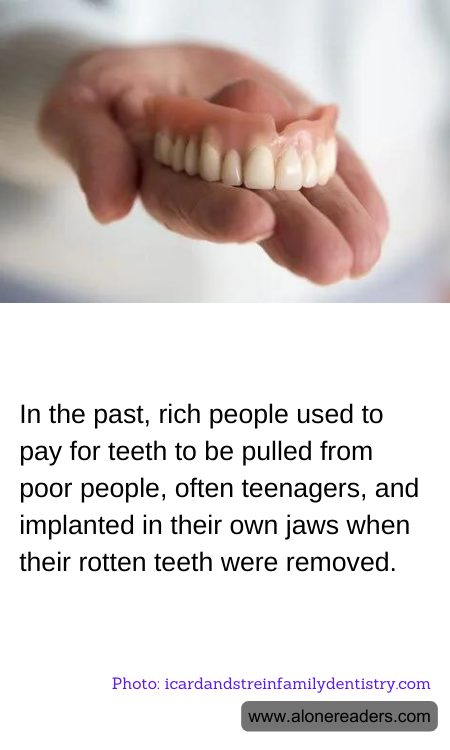
In the annals of dental history, there exists a practice that starkly contrasts with today's ethical standards and medical advancements. During the 18th and early 19th centuries, a peculiar and unsettling trend emerged among the affluent: the transplantation of teeth from the mouths of the poor, often teenagers, into their own. This practice, known as "tooth transplantation" or "live donor tooth transplantation," was driven by the desire of the wealthy to maintain a semblance of youth and health, even at the expense of the less fortunate.
The procedure was relatively straightforward yet gruesome by modern standards. Wealthy individuals, plagued by dental decay and the absence of effective dental care, sought to replace their rotten teeth with healthy ones. In an era before the advent of modern dentistry, the solution was to procure teeth from those who had them in abundance—the poor. Teenagers, with their robust and healthy teeth, were often targeted. In exchange for a meager sum, these young individuals would endure the extraction of their teeth, which were then implanted into the jaws of the wealthy.
This practice was not only painful but also fraught with complications. The lack of sterilization and understanding of infection control meant that many recipients suffered from severe infections, and the success rate of such transplants was low. Despite these risks, the demand for fresh, healthy teeth remained high among the elite, driven by societal pressures to maintain a youthful appearance and the limited dental solutions available at the time.
The ethical implications of this practice are glaringly apparent today. It highlights a period when the disparity between the rich and poor extended into the realm of personal health and bodily autonomy. The poor, often desperate for financial relief, were left with gaps in their smiles and potential health issues, while the wealthy flaunted their new acquisitions, oblivious or indifferent to the human cost.
As dentistry evolved, the practice of tooth transplantation fell out of favor, replaced by more humane and effective methods such as dentures and, eventually, dental implants. The story of tooth transplantation serves as a reminder of the lengths to which people have gone in the pursuit of beauty and the ethical considerations that must guide medical practices. It underscores the importance of advancements in dental care and the need for equitable access to health services, ensuring that no one is forced to sacrifice their well-being for the benefit of another.