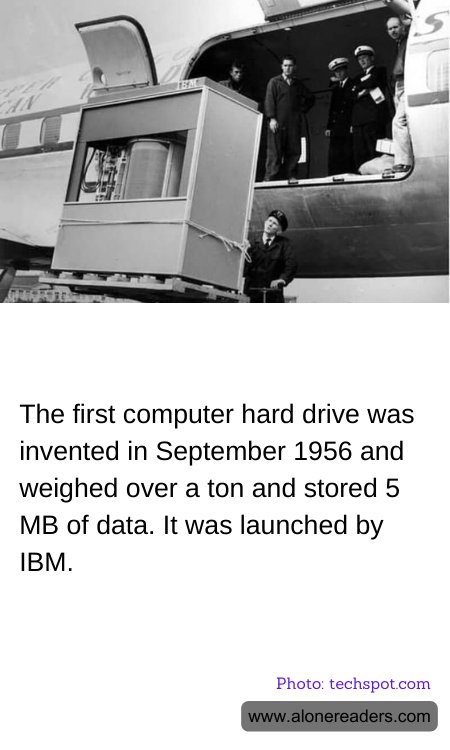
In the annals of technological history, September 1956 marks a significant milestone with the invention of the first computer hard drive by IBM. This groundbreaking development laid the foundation for the digital storage solutions we rely on today. The hard drive, known as the IBM 350 Disk Storage Unit, was part of the IBM 305 RAMAC (Random Access Method of Accounting and Control) system. It was a marvel of engineering at the time, despite its massive size and limited storage capacity by today's standards.
Weighing over a ton, the IBM 350 was a behemoth, occupying an entire room. It was a far cry from the sleek, portable storage devices we are accustomed to now. The drive consisted of fifty 24-inch disks, spinning at 1,200 revolutions per minute, and it required a dedicated air conditioning system to keep it cool. This massive piece of machinery was capable of storing a mere 5 megabytes of data, an amount that seems minuscule in the age of terabyte drives and cloud storage. To put this into perspective, 5 megabytes is roughly equivalent to a single high-resolution photograph or a few seconds of video.
Despite its size and limited capacity, the IBM 350 was revolutionary. Before its invention, data storage was primarily done using punch cards and magnetic tape, which were cumbersome and slow. The introduction of the hard drive allowed for random access to data, meaning that information could be retrieved in milliseconds rather than minutes. This innovation drastically improved the efficiency of data processing and paved the way for the development of modern computing.
The IBM 350 was initially used by businesses for accounting and inventory management, tasks that required the rapid processing of large amounts of data. Its introduction marked the beginning of the digital age, where information could be stored and accessed electronically, transforming industries and everyday life. The hard drive's invention was a testament to human ingenuity and the relentless pursuit of progress, setting the stage for the rapid advancements in technology that followed.
Today, as we carry gigabytes of data in our pockets and access vast amounts of information through the cloud, it's easy to take for granted the convenience and power of modern storage solutions. However, the legacy of the IBM 350 serves as a reminder of how far we have come in just a few decades. It highlights the incredible pace of technological advancement and the continuous drive to innovate and improve.
In conclusion, the invention of the first computer hard drive by IBM in 1956 was a pivotal moment in the history of technology. It not only revolutionized data storage but also set the stage for the digital revolution that continues to shape our world. As we look to the future, it's important to remember and appreciate the pioneering efforts that have brought us to where we are today.
