In the year 2000, a peculiar and controversial event unfolded near St. Louis, Missouri, that captured national attention and sparked a conversation about race, symbolism, and the power of civic action. The Ku Klux Klan, a group notorious for its history of racial hatred and violence, applied to adopt a stretch of highway under Missouri's "Adopt-A-Highway" program. This program, designed to encourage community groups to take responsibility for cleaning and maintaining sections of public roadways, was intended to foster civic pride and community involvement. However, the Klan's involvement raised significant concerns and objections from the public and government officials alike.
The Klan's application was initially accepted, as the program's guidelines did not allow for discrimination based on the applicant's beliefs. This decision was met with outrage and discomfort, as many felt that allowing the Klan to adopt a highway was tantamount to endorsing their hateful ideology. The situation posed a legal and ethical dilemma: how could the state uphold the principles of free speech and equal treatment under the law while also addressing the deep-seated pain and division that the Klan's involvement represented?
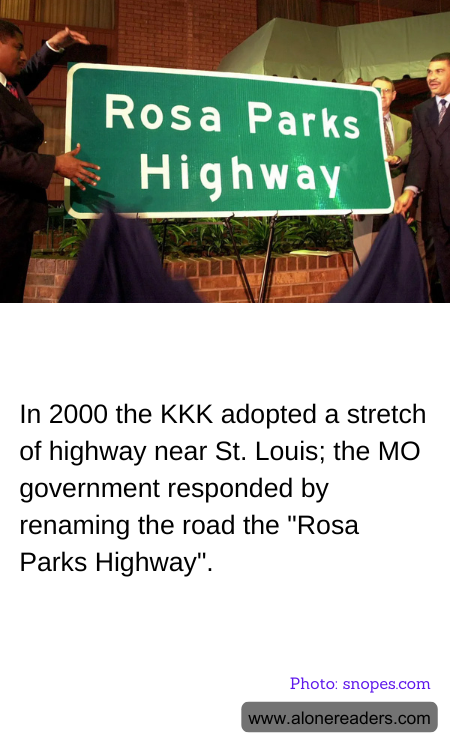
In a move that was both symbolic and strategic, the Missouri government found a creative solution to counteract the Klan's presence. In 2001, the state legislature voted to rename the stretch of highway in question as the "Rosa Parks Highway." This decision was a powerful statement, transforming a potential symbol of hate into one of hope and resilience. Rosa Parks, a civil rights icon known for her pivotal role in the Montgomery Bus Boycott, represented the antithesis of the Klan's values. By associating the highway with her legacy, the state of Missouri sent a clear message of inclusivity and progress.
The renaming of the highway served as a reminder of the ongoing struggle for civil rights and the importance of standing against hate in all its forms. It highlighted the power of symbolic gestures in shaping public discourse and reaffirmed the state's commitment to equality and justice. The decision also underscored the importance of community action and the role of government in reflecting the values of its citizens.
This episode in Missouri's history is a testament to the enduring impact of individuals like Rosa Parks and the collective efforts of those who continue to fight for a more just and equitable society. It serves as a reminder that while hate may persist, it can be countered with acts of courage, creativity, and compassion. The "Rosa Parks Highway" stands as a beacon of hope, a tribute to the progress that has been made, and a call to action for the work that remains.
