More About This Card
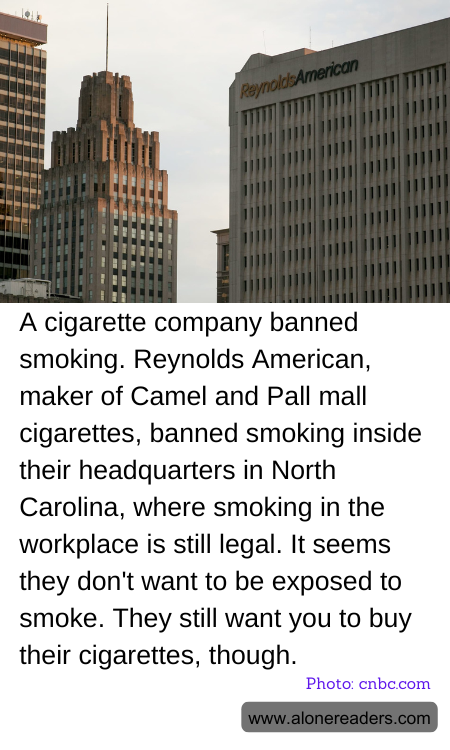
In a surprising move that has sparked discussions across various sectors, Reynolds American, the parent company of well-known cigarette brands such as Camel and Pall Mall, has implemented a smoking ban within its headquarters in North Carolina. This decision is particularly noteworthy given that smoking in the workplace remains legal in the state. The ban reflects a growing trend among companies to create healthier work environments, even when their core business might seem at odds with such policies.
Reynolds American's decision to prohibit smoking inside its own offices is a testament to the evolving attitudes towards smoking and health. While the company continues to produce and market cigarettes, it appears to be acknowledging the health risks associated with smoking by protecting its employees from secondhand smoke. This move aligns with broader public health initiatives that aim to reduce smoking-related illnesses and promote cleaner air in shared spaces.
The irony of a cigarette manufacturer banning smoking on its premises has not gone unnoticed. Critics argue that the company is sending mixed messages by advocating for smoke-free environments internally while continuing to sell products that contribute to smoking-related health issues. However, supporters of the ban suggest that it demonstrates a level of corporate responsibility, recognizing the importance of safeguarding employee health despite the nature of the business.
This decision also highlights the complex relationship between tobacco companies and public health. While Reynolds American is taking steps to protect its workforce, it remains committed to its business model, encouraging consumers to purchase its products. This duality reflects the broader challenges faced by tobacco companies in balancing profitability with social responsibility.
The move by Reynolds American could potentially influence other companies in the tobacco industry to reconsider their workplace policies. As societal norms continue to shift towards healthier lifestyles, businesses may find it increasingly necessary to adapt in order to maintain a positive public image and retain employee satisfaction.
In conclusion, Reynolds American's smoking ban within its headquarters is a significant development in the ongoing conversation about smoking and corporate responsibility. While the company continues to market its products, its decision to create a smoke-free workplace underscores a recognition of the health implications associated with smoking. As the dialogue around smoking and health evolves, it will be interesting to see how other companies in the industry respond to similar pressures and whether this trend will lead to broader changes in workplace policies across the sector.