More About This Card
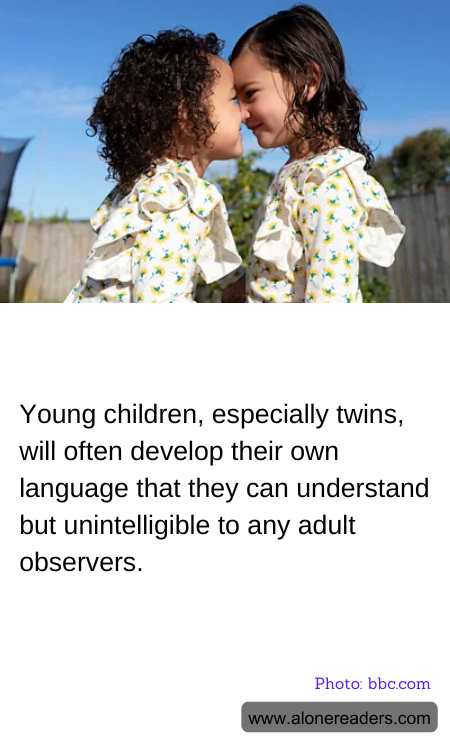
In the fascinating world of child development, one of the most intriguing phenomena is the creation of a private language by young children, particularly twins. This unique form of communication, often referred to as "cryptophasia" or "twin language," is a testament to the deep bond and shared experiences between siblings. While it may sound like gibberish to outsiders, to the children involved, it is a fully functional language that allows them to communicate effectively with one another.
Cryptophasia typically emerges during the early years of life, a period marked by rapid cognitive and linguistic development. During this time, children are experimenting with sounds and words, trying to make sense of the language spoken around them. Twins, who often spend a significant amount of time together, may develop their own linguistic shortcuts and unique vocabulary as a result of their close relationship and shared environment. This private language can include invented words, unique pronunciations, and even gestures that hold specific meanings understood only by the twins.
The development of such a language is not only a reflection of the twins' close bond but also an indication of their creativity and problem-solving abilities. By creating their own means of communication, they are able to express their needs, thoughts, and emotions in a way that feels natural and intuitive to them. This phenomenon is not limited to twins; it can also occur among siblings who are close in age or even among young children who spend a lot of time together in a shared environment.
While cryptophasia is a remarkable display of linguistic innovation, it is usually a temporary phase. As children grow and their exposure to the outside world increases, they gradually adopt the language spoken by those around them. This transition is often facilitated by interactions with parents, caregivers, and peers, who provide the necessary linguistic input and reinforcement. Over time, the private language fades, replaced by the more conventional language skills that enable them to communicate with a broader audience.
For parents and caregivers, witnessing the development of a private language can be both amusing and perplexing. It is important to remember that this is a natural part of language development and not a cause for concern. Encouraging children to engage with others and exposing them to a variety of linguistic experiences can help them transition smoothly to more widely understood forms of communication.
In conclusion, the creation of a private language by young children, especially twins, is a captivating aspect of early childhood development. It highlights the innate human capacity for language and the deep connections that can form between siblings. While it may be a fleeting phase, it serves as a reminder of the creativity and adaptability inherent in all children as they navigate the complex world of language and communication.