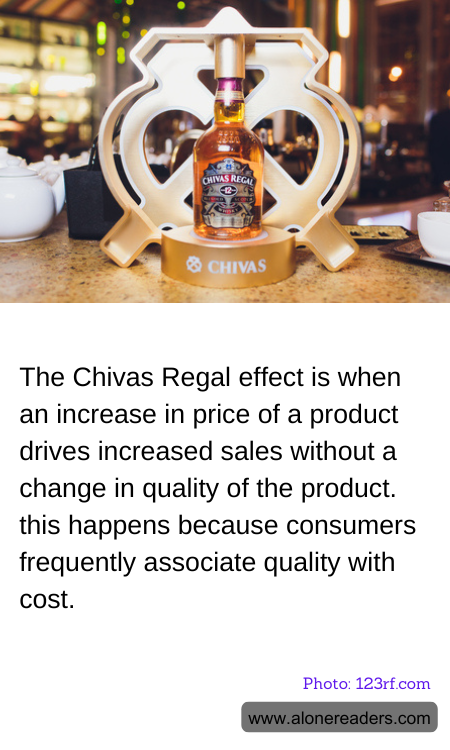
In the world of consumer behavior, the Chivas Regal effect stands as a fascinating phenomenon where an increase in the price of a product leads to a surge in sales, despite no change in the product's quality. Named after the premium Scotch whisky brand, this effect underscores a common consumer perception: higher cost often equates to higher quality. This intriguing dynamic challenges traditional economic theories that suggest price hikes should deter buyers, instead revealing the complex psychology behind purchasing decisions.
The Chivas Regal effect is rooted in the human tendency to use price as a heuristic, or mental shortcut, for assessing quality. In a marketplace flooded with choices, consumers often lack the time or expertise to thoroughly evaluate every product. As a result, they rely on price as a proxy for quality, assuming that more expensive items are superior. This perception is particularly prevalent in markets where quality is difficult to ascertain, such as luxury goods, wines, and spirits. Here, the price tag becomes a signal of prestige and excellence, enticing consumers to buy into the allure of exclusivity.
This effect is not merely a quirk of consumer psychology but a strategic tool employed by marketers and businesses. By positioning their products at a higher price point, companies can cultivate an image of premium quality and sophistication. This strategy can be particularly effective in industries where brand image and status play a significant role in consumer choice. For instance, luxury fashion brands, high-end electronics, and gourmet food producers often leverage the Chivas Regal effect to differentiate themselves from competitors and justify their premium pricing.
However, the Chivas Regal effect is not without its risks. While a higher price can enhance perceived value, it can also alienate price-sensitive consumers and limit market reach. Moreover, if the actual quality of the product does not meet the elevated expectations set by its price, it can lead to consumer dissatisfaction and damage brand reputation. Therefore, businesses must strike a delicate balance, ensuring that their pricing strategy aligns with their brand promise and delivers genuine value to consumers.
In conclusion, the Chivas Regal effect highlights the intricate interplay between price, perception, and purchasing behavior. It serves as a reminder that consumer decisions are not solely driven by rational calculations but are deeply influenced by psychological factors. For businesses, understanding this effect can unlock new opportunities to enhance brand perception and drive sales. For consumers, it offers a valuable insight into the subconscious cues that shape their buying habits, encouraging a more mindful approach to consumption. As the marketplace continues to evolve, the Chivas Regal effect remains a testament to the enduring power of perception in the world of commerce.
