More About This Card
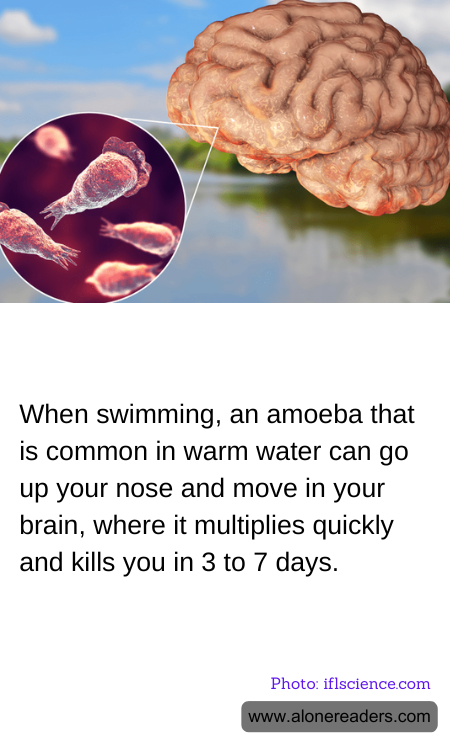
In the serene and inviting waters of lakes and hot springs, a hidden danger lurks that many swimmers are unaware of. This danger comes in the form of a microscopic organism known as Naegleria fowleri, often referred to as the "brain-eating amoeba." This single-celled organism thrives in warm freshwater environments and poses a significant health risk to those who come into contact with it.
Naegleria fowleri is particularly insidious because of its ability to enter the human body through the nose. Once inside, it travels up the olfactory nerve to the brain, where it begins to multiply rapidly. This invasion can lead to a rare but devastating condition known as primary amebic meningoencephalitis (PAM). The symptoms of PAM can appear suddenly and include headache, fever, nausea, vomiting, and a stiff neck. As the infection progresses, it can cause confusion, seizures, and hallucinations, ultimately leading to death within three to seven days.
Despite its alarming nature, infections caused by Naegleria fowleri are extremely rare. However, the fatality rate is exceptionally high, with only a handful of survivors documented. This makes awareness and prevention crucial, especially for those who frequent warm freshwater bodies. The amoeba cannot survive in saltwater, so ocean swimmers are not at risk. Additionally, it cannot infect individuals who drink contaminated water, as it must enter through the nasal passages to reach the brain.
To reduce the risk of infection, swimmers should take precautions when engaging in activities in warm freshwater. Avoiding water-related activities in areas where the amoeba is known to be present is the most effective prevention. If swimming in such waters is unavoidable, using nose clips or keeping the head above water can help prevent water from entering the nasal passages. It is also advisable to avoid stirring up sediment in shallow, warm freshwater areas, as the amoeba can be present in the sediment.
Public health officials continue to monitor and study Naegleria fowleri to better understand its behavior and develop strategies to prevent infections. While the risk is low, the consequences of infection are severe, making it essential for swimmers to be informed and cautious. By taking simple preventive measures, individuals can enjoy the beauty and recreation of natural water bodies while minimizing the risk of encountering this deadly organism.