More About This Card
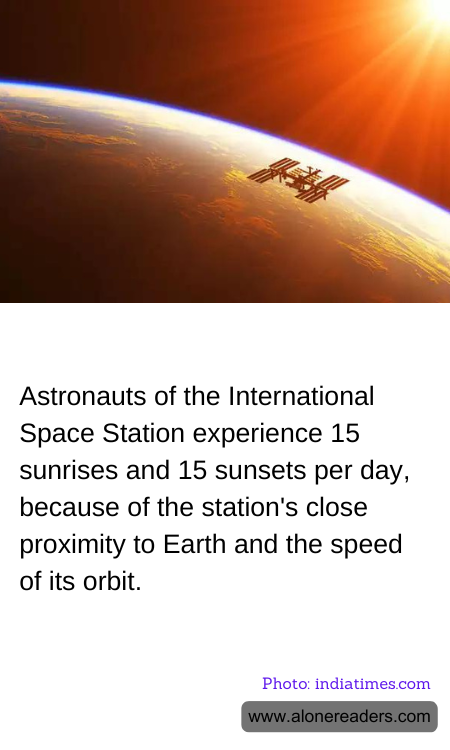
Imagine witnessing the breathtaking beauty of a sunrise or sunset. Now, imagine experiencing this awe-inspiring event not once, but 15 times in a single day. This is the extraordinary reality for astronauts aboard the International Space Station (ISS), a marvel of human engineering and exploration orbiting our planet.
The ISS orbits Earth at an altitude of approximately 420 kilometers (about 261 miles), traveling at a staggering speed of around 28,000 kilometers per hour (about 17,500 miles per hour). This incredible velocity allows the station to complete an orbit around Earth roughly every 90 minutes. As a result, astronauts on board witness 15 sunrises and 15 sunsets each day, a phenomenon that is both scientifically fascinating and visually stunning.
The rapid succession of day and night cycles is due to the station's close proximity to Earth and its swift orbit. Unlike on Earth, where a day is defined by a 24-hour cycle, the ISS experiences a day in just 90 minutes. This means that every 45 minutes, the station transitions from the light of day to the darkness of night, offering astronauts a unique perspective on the passage of time and the beauty of our planet.
For the astronauts, these frequent transitions between day and night present both challenges and opportunities. The constant change in lighting conditions can disrupt their circadian rhythms, the natural internal process that regulates the sleep-wake cycle. To mitigate this, the ISS is equipped with specialized lighting systems designed to simulate Earth-like day and night cycles, helping astronauts maintain a regular schedule and ensuring their well-being during their missions.
Beyond the practical considerations, the experience of witnessing multiple sunrises and sunsets each day offers a profound reminder of Earth's beauty and fragility. From the vantage point of the ISS, astronauts can observe the thin blue line of Earth's atmosphere, the vastness of the oceans, and the intricate patterns of clouds. These views not only inspire awe but also underscore the importance of protecting our planet for future generations.
The phenomenon of experiencing 15 sunrises and sunsets daily is a testament to the remarkable achievements of space exploration. It highlights the unique challenges and opportunities faced by astronauts as they conduct scientific research and technological experiments that benefit life on Earth. As humanity continues to explore the cosmos, the lessons learned from the ISS will undoubtedly pave the way for future missions, inspiring generations to come with the wonders of space and the beauty of our home planet.