More About This Card
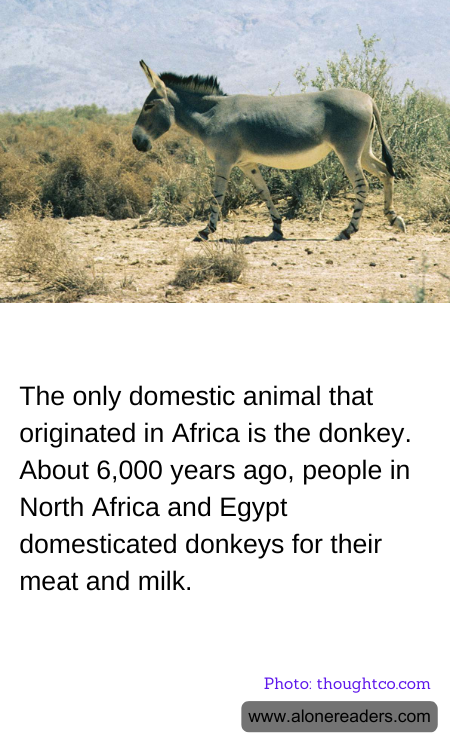
The donkey, a humble yet resilient creature, holds a unique place in the history of domesticated animals. Unlike other domestic animals that have origins scattered across the globe, the donkey is the only one that can trace its roots back to the African continent. Approximately 6,000 years ago, the people of North Africa and Egypt recognized the potential of these sturdy animals and began the process of domestication, primarily for their meat and milk.
In the arid landscapes of North Africa, the donkey proved to be an invaluable asset. Its ability to endure harsh conditions and carry heavy loads made it an essential companion for early human societies. The domestication of the donkey marked a significant milestone in human history, as it facilitated trade and transportation across vast desert regions. This development not only enhanced the mobility of ancient civilizations but also contributed to the cultural and economic exchanges that shaped the ancient world.
The early Egyptians, in particular, held the donkey in high regard. They utilized these animals not only for their practical benefits but also integrated them into their cultural and religious practices. Donkeys were often depicted in ancient Egyptian art and were sometimes associated with deities, symbolizing strength and perseverance. The reliance on donkeys for transportation and agricultural purposes underscored their importance in sustaining the livelihoods of these early societies.
As time progressed, the role of the donkey expanded beyond the borders of Africa. The domesticated donkey spread to other parts of the world, adapting to various climates and terrains. Its versatility and endurance made it a favored beast of burden in many cultures, from the Middle East to Europe and beyond. Despite the advent of modern technology and machinery, donkeys continue to be used in many parts of the world today, particularly in regions where mechanized transport is impractical or unaffordable.
The story of the donkey is a testament to the enduring bond between humans and animals. Its domestication in Africa set the stage for a relationship that has spanned millennia, highlighting the adaptability and resilience of both the animal and the people who have relied on it. As we reflect on the history of domesticated animals, the donkey stands out not only for its unique origin but also for its ongoing contribution to human societies across the globe.