More About This Card
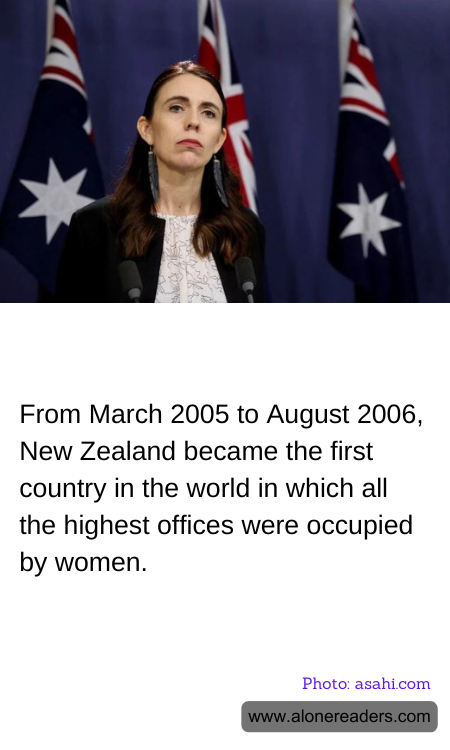
Between March 2005 and August 2006, New Zealand achieved a remarkable milestone in its political history by becoming the first country in the world where all the highest offices were held by women. This period marked a significant step forward in gender equality and demonstrated the nation's progressive stance on female leadership.
At the helm of this historic moment was Prime Minister Helen Clark, who served as the head of government from 1999 to 2008. Known for her strong leadership and commitment to social justice, Clark was instrumental in shaping New Zealand's domestic and international policies. Her tenure was characterized by a focus on sustainability, economic growth, and social welfare, which earned her widespread respect both at home and abroad.
Alongside Clark, Dame Silvia Cartwright held the position of Governor-General, representing the British monarch in New Zealand. Appointed in 2001, Cartwright was the second woman to hold this office. Her legal background and dedication to human rights issues made her a respected figure in the country. As Governor-General, she played a crucial role in promoting New Zealand's values of democracy and equality.
The Chief Justice of New Zealand during this period was Dame Sian Elias, who was appointed in 1999. As the first woman to hold this position, Elias was a trailblazer in the legal field. Her tenure was marked by significant judicial reforms and a commitment to upholding the rule of law. Elias's leadership in the judiciary was pivotal in ensuring that New Zealand's legal system remained fair and just.
Completing this quartet of female leadership was Margaret Wilson, who served as the Speaker of the House of Representatives from 2005 to 2008. Wilson was known for her expertise in constitutional law and her efforts to modernize parliamentary procedures. Her role as Speaker was crucial in maintaining order and decorum in the legislative process, ensuring that the voices of all New Zealanders were heard.
This unique period in New Zealand's history was not just a symbolic victory for women but also a testament to the country's commitment to gender equality. It highlighted the capabilities and contributions of women in leadership roles and set a precedent for other nations to follow. The achievements of these women leaders inspired future generations and reinforced the idea that leadership should be based on merit, not gender.
New Zealand's experience from March 2005 to August 2006 serves as a powerful reminder of the progress that can be made when societies embrace diversity and inclusivity. It underscores the importance of providing equal opportunities for all individuals, regardless of gender, to contribute to the betterment of their communities and countries. As the world continues to strive for gender equality, New Zealand's example remains a beacon of hope and inspiration.