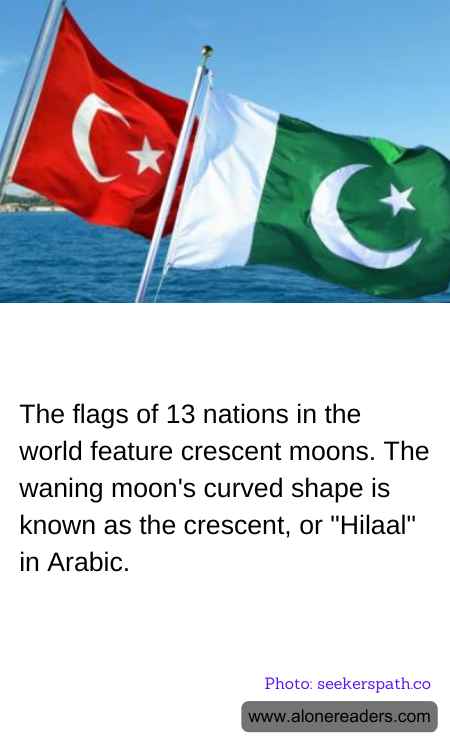
The crescent moon, a symbol steeped in history and cultural significance, graces the flags of 13 nations around the world. Known as "Hilaal" in Arabic, the crescent moon's distinctive curved shape is often associated with Islam, but its origins and meanings extend beyond religious connotations, reflecting a rich tapestry of historical and cultural narratives.
The crescent moon has been a symbol of power and sovereignty for centuries, long before its association with Islam. Its use dates back to ancient civilizations, including the Sumerians and Byzantines, who revered the moon for its role in agriculture and timekeeping. The crescent was later adopted by the Ottoman Empire, which played a significant role in spreading its use across the Islamic world. Today, the crescent moon is prominently featured on the flags of countries such as Turkey, Pakistan, and Malaysia, among others, symbolizing unity, progress, and the guiding light of faith.
Each nation that incorporates the crescent moon into its flag does so with unique interpretations and intentions. In Turkey, the crescent and star are emblematic of the nation's historical ties to the Ottoman Empire and its enduring Islamic heritage. Pakistan's flag, featuring a white crescent and star on a green field, represents the country's commitment to Islam and the unity of its people. Similarly, Malaysia's flag includes a crescent moon to signify the country's official religion, Islam, while also representing the harmony between its diverse ethnic groups.
Beyond its religious significance, the crescent moon is also a universal symbol of change and renewal. Its waxing and waning phases mirror the cycles of nature and human life, embodying themes of growth, transformation, and hope. This symbolism resonates with many cultures and is reflected in the flags of nations like Tunisia and Algeria, where the crescent moon stands as a beacon of resilience and aspiration.
The crescent moon's presence on national flags serves as a reminder of the interconnectedness of history, culture, and identity. It highlights the shared values and aspirations of diverse peoples, while also celebrating the unique heritage of each nation. As a symbol that transcends borders and beliefs, the crescent moon continues to inspire and unite, offering a timeless emblem of hope and renewal for generations to come.
In a world that is increasingly interconnected yet diverse, the crescent moon on these flags serves as a powerful reminder of the shared human experience. It invites us to reflect on our commonalities and celebrate our differences, fostering a spirit of understanding and cooperation among nations. Whether viewed as a symbol of faith, power, or transformation, the crescent moon remains a captivating and enduring emblem, illuminating the path toward a brighter future.
