More About This Card
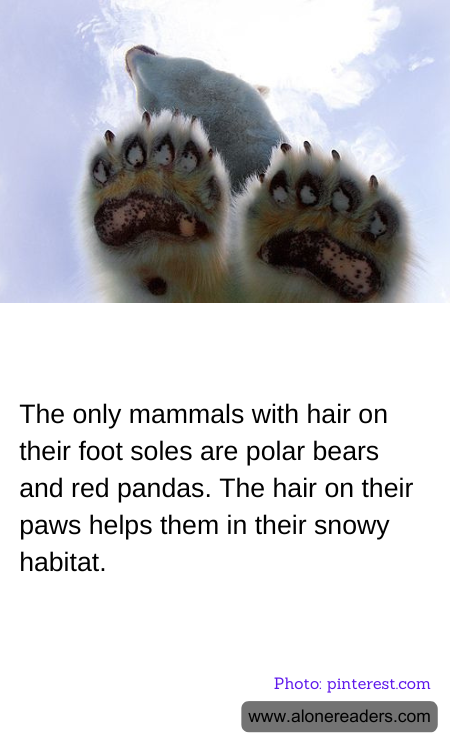
In the vast and varied world of mammals, the polar bear and the red panda stand out for a unique adaptation that sets them apart: they are the only mammals with hair on the soles of their feet. This distinctive feature plays a crucial role in their survival, particularly in the snowy and icy environments they inhabit.
Polar bears, the majestic giants of the Arctic, are perfectly adapted to their frigid surroundings. Their thick, water-repellent fur and a substantial layer of fat provide insulation against the cold. However, it is the hair on the soles of their feet that offers a remarkable advantage. This specialized fur provides traction on the slippery ice, preventing the bears from slipping as they traverse the frozen landscape in search of seals, their primary food source. Additionally, the hair acts as a thermal barrier, protecting their paws from the biting cold of the ice and snow. This adaptation is essential for their survival, allowing them to move efficiently and hunt effectively in one of the harshest climates on Earth.
Similarly, the red panda, a small and elusive creature native to the temperate forests of the Himalayas and southwestern China, benefits from this unique adaptation. Although they inhabit a different environment than polar bears, red pandas also face cold, snowy conditions. The hair on their foot soles provides them with the necessary grip to navigate the slippery branches and rocky terrain of their mountainous habitat. This adaptation is particularly important as red pandas spend a significant amount of time in trees, foraging for bamboo and other vegetation. The insulating properties of the fur also help keep their paws warm, ensuring they can maintain their active lifestyle even in the coldest months.
The presence of hair on the foot soles of these two mammals highlights the incredible diversity of evolutionary adaptations in the animal kingdom. It underscores the importance of specialized traits that enable species to thrive in specific environments. For both polar bears and red pandas, this adaptation is a testament to nature's ingenuity, providing them with the tools they need to survive and flourish in their respective habitats.
In a world where climate change and habitat loss pose significant threats to wildlife, understanding and appreciating these unique adaptations becomes increasingly important. By recognizing the specialized features that help animals like polar bears and red pandas survive, we can better appreciate the delicate balance of ecosystems and the need to protect these remarkable creatures and their habitats for future generations.