More About This Card
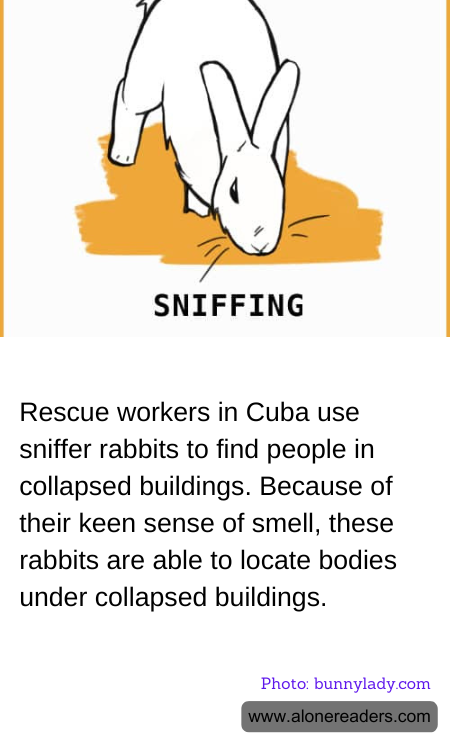
In the heart of Cuba, a unique and innovative approach to search and rescue operations is gaining attention. Rescue workers in the country have turned to an unexpected ally in their efforts to locate people trapped under collapsed buildings: sniffer rabbits. These small, agile creatures are proving to be invaluable in situations where time is of the essence and traditional methods may fall short.
Rabbits, known for their acute sense of smell, are being trained to detect human scent amidst the rubble of collapsed structures. Their ability to navigate through tight spaces and their lightweight nature make them ideal for this challenging task. Unlike larger animals traditionally used in search and rescue, such as dogs, rabbits can easily maneuver through debris without causing further instability to the already precarious structures.
The use of sniffer rabbits is a testament to human ingenuity and adaptability in the face of disaster. In situations where every second counts, these rabbits can quickly identify the presence of survivors or victims, allowing rescue teams to focus their efforts more effectively. Their keen sense of smell enables them to detect even the faintest traces of human scent, which can be crucial in locating individuals who may be unconscious or unable to call for help.
Training these rabbits involves a process similar to that used for sniffer dogs. They are exposed to various scents and taught to recognize and respond to the specific smell of humans. The rabbits are then taken through simulated disaster scenarios to hone their skills in real-world conditions. This training ensures that when disaster strikes, the rabbits are ready to spring into action.
The introduction of sniffer rabbits in Cuba's rescue operations highlights the importance of innovation in emergency response strategies. As natural disasters become more frequent and severe due to climate change, the need for effective and efficient rescue methods is more critical than ever. By leveraging the unique abilities of animals like rabbits, rescue teams can enhance their capabilities and improve the chances of saving lives.
This approach also underscores the broader potential for animals in various roles beyond traditional expectations. While dogs have long been the go-to animals for search and rescue, the success of sniffer rabbits in Cuba may inspire other countries to explore similar strategies. It serves as a reminder that sometimes, the most effective solutions can come from the most unexpected sources.
In conclusion, the use of sniffer rabbits in Cuba is a remarkable example of how creativity and resourcefulness can lead to life-saving innovations. As these rabbits continue to prove their worth in rescue missions, they offer hope and inspiration for future advancements in emergency response. Their story is a testament to the power of nature and the endless possibilities that arise when humans and animals work together towards a common goal.