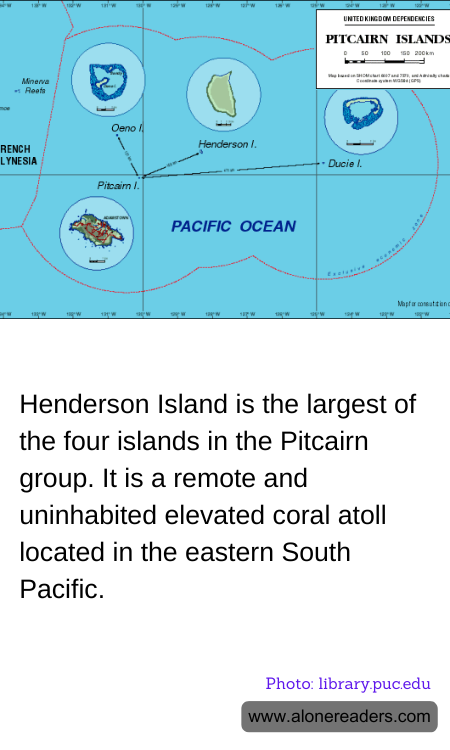
Henderson Island, a remote and uninhabited elevated coral atoll, stands as the largest of the four islands in the Pitcairn group, nestled in the eastern South Pacific. This enigmatic island, with its pristine beaches and unique ecological features, offers a glimpse into a world largely untouched by human influence. Its isolation and natural beauty have made it a subject of fascination for scientists and adventurers alike.
The island's remoteness is one of its most defining characteristics. Located over 5,000 kilometers from the nearest continental landmass, Henderson Island is a testament to the power of nature to thrive in seclusion. Its elevated coral atoll structure is a result of geological processes that have lifted the coral reefs above sea level, creating a unique landscape that supports a variety of endemic species. This isolation has allowed the island's flora and fauna to evolve independently, resulting in a rich tapestry of life that cannot be found anywhere else on Earth.
Despite its uninhabited status, Henderson Island is not devoid of life. It is home to ten plant species and four bird species that are found nowhere else in the world. The island's dense forests and rugged terrain provide a sanctuary for these unique species, making it a critical area for biodiversity conservation. In recognition of its ecological significance, Henderson Island was designated a UNESCO World Heritage Site in 1988, highlighting the need to preserve its untouched environment for future generations.
However, the island is not immune to the challenges faced by many remote ecosystems. Marine debris, particularly plastic waste, has become an increasing concern, washing up on its shores from distant lands. This pollution poses a threat to the island's delicate ecosystem and serves as a stark reminder of the global impact of human activity on even the most isolated corners of the planet. Efforts are underway to address this issue, with conservationists and researchers working to clean up the island and raise awareness about the importance of protecting such unique environments.
Henderson Island remains a symbol of natural beauty and ecological importance. Its untouched landscapes and unique biodiversity offer invaluable insights into the resilience of nature and the need for global conservation efforts. As we continue to explore and understand this remote atoll, it serves as a reminder of the delicate balance between human activity and the preservation of our planet's most precious ecosystems.
