More About This Card
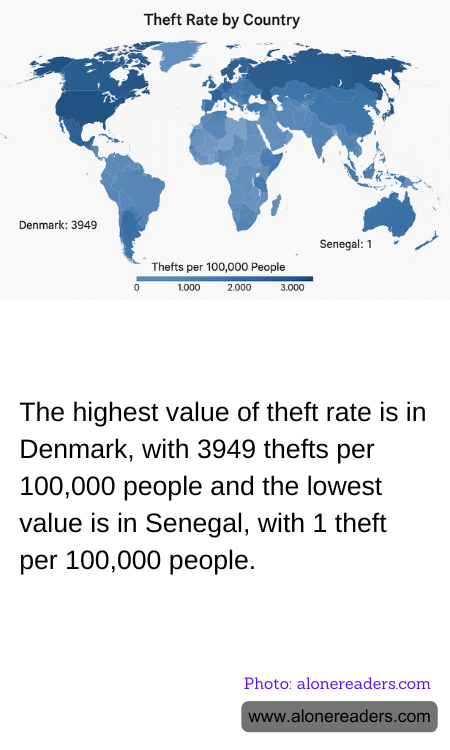
In the realm of global crime statistics, theft rates offer a fascinating glimpse into the socio-economic and cultural dynamics of different countries. At the forefront of this discussion is Denmark, a nation renowned for its high standard of living and robust social welfare system, yet it paradoxically reports the highest theft rate in the world, with 3,949 thefts per 100,000 people. On the opposite end of the spectrum lies Senegal, a West African nation with a remarkably low theft rate of just 1 per 100,000 people. This stark contrast raises intriguing questions about the factors influencing these statistics and what they reveal about the societies in question.
Denmark's high theft rate can be attributed to several factors, including its urbanization and the prevalence of petty crimes such as pickpocketing and bicycle theft, which are common in densely populated areas. The country's efficient reporting system and trust in law enforcement may also contribute to the high numbers, as citizens are more likely to report crimes, knowing that they will be taken seriously. Moreover, Denmark's wealth and the availability of high-value goods make it an attractive target for thieves. Despite these figures, Denmark remains one of the safest countries in the world, with low rates of violent crime and a strong sense of community trust.
In contrast, Senegal's low theft rate might be influenced by its cultural and societal norms. The country has a strong tradition of community and family ties, which can act as a deterrent to crime. Additionally, the economic landscape in Senegal is vastly different from that of Denmark. With fewer high-value goods available and a different socio-economic structure, the incentives and opportunities for theft may be less prevalent. Furthermore, underreporting could play a role, as in many developing countries, not all crimes are reported due to a lack of trust in law enforcement or the perception that reporting will not lead to a resolution.
These contrasting statistics highlight the complexity of crime and its relationship with societal structures. While Denmark's high theft rate might suggest a problem, it is essential to consider the broader context of safety and trust in the country. Similarly, Senegal's low rate does not necessarily indicate a crime-free society but rather reflects different societal dynamics and possibly underreporting.
Understanding these nuances is crucial for policymakers and researchers who aim to address crime effectively. It underscores the importance of considering cultural, economic, and systemic factors when analyzing crime statistics. By doing so, countries can develop tailored strategies that address the root causes of theft and improve the overall safety and well-being of their citizens. As we delve deeper into the reasons behind these figures, it becomes clear that crime rates are not merely numbers but reflections of the intricate tapestry of human society.