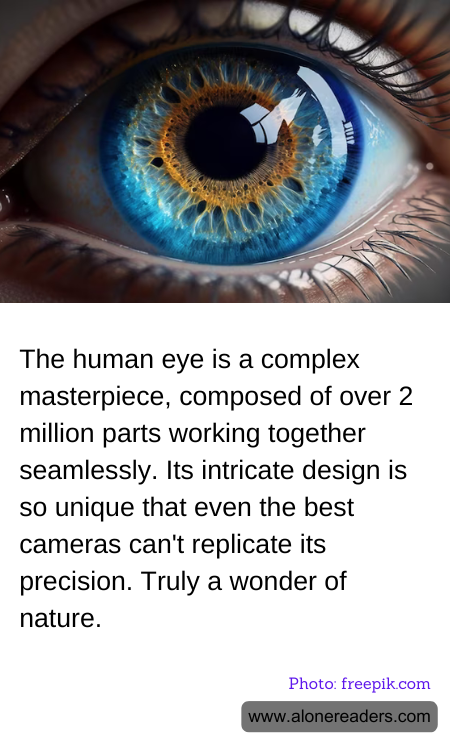
The human eye is often described as a window to the soul, but it is also a marvel of biological engineering. Composed of over two million working parts, the eye is a complex masterpiece that has fascinated scientists, artists, and philosophers for centuries. Its intricate design allows us to perceive the world in vivid detail, capturing light and translating it into the rich tapestry of colors and shapes that define our visual experience.
At the heart of the eye's complexity is its ability to process light with remarkable precision. Light enters through the cornea, the eye's outermost layer, which acts as a protective shield and a lens that begins the process of focusing. This light then passes through the pupil, the adjustable opening that regulates the amount of light entering the eye, much like the aperture of a camera. The iris, the colored part of the eye, controls the size of the pupil, adapting to different lighting conditions to ensure optimal vision.
Once light passes through the pupil, it reaches the lens, which fine-tunes the focus, directing light onto the retina at the back of the eye. The retina is a thin layer of tissue lined with millions of photoreceptor cells known as rods and cones. Rods are responsible for vision in low light conditions, while cones detect color and fine detail. This dual system allows humans to see in a wide range of lighting conditions, from the dim glow of twilight to the bright midday sun.
The retina's photoreceptors convert light into electrical signals, which are then transmitted to the brain via the optic nerve. This process happens almost instantaneously, allowing us to perceive the world in real-time. The brain then interprets these signals, constructing the images we see and enabling us to navigate our environment with ease.
Despite advances in technology, even the most sophisticated cameras cannot replicate the eye's precision and adaptability. Cameras may capture images with high resolution, but they lack the dynamic range and depth perception that the human eye naturally possesses. The eye's ability to adjust focus, adapt to varying light conditions, and perceive a wide spectrum of colors is unmatched by any man-made device.
The human eye is not only a testament to the wonders of nature but also a reminder of the incredible complexity of biological systems. Its seamless integration of millions of components working in harmony is a marvel that continues to inspire awe and curiosity. As we continue to explore the mysteries of the eye, we gain a deeper appreciation for the intricate design and functionality that make it one of nature's most extraordinary creations.
