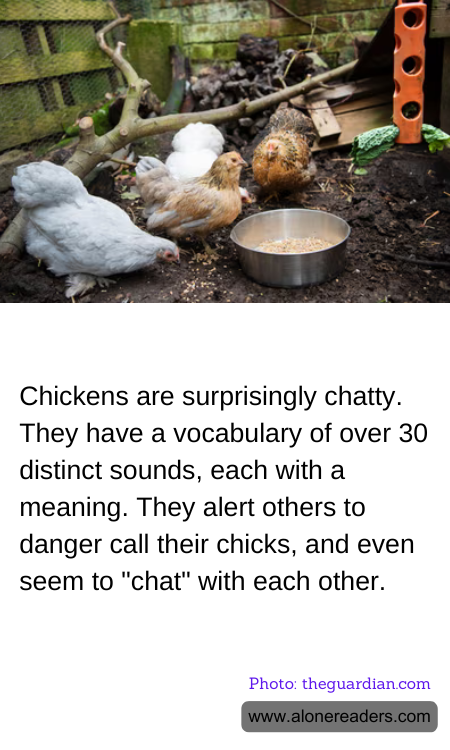
Chickens, often underestimated in their communicative abilities, are surprisingly chatty creatures. These feathered friends possess a vocabulary of over 30 distinct sounds, each carrying its own unique meaning. This rich tapestry of vocalizations plays a crucial role in their social interactions and survival strategies, making chickens far more complex than they might initially appear.
One of the most fascinating aspects of chicken communication is their ability to alert each other to danger. When a predator is nearby, chickens emit a specific alarm call that prompts the flock to take cover. This sound is distinct and immediately recognizable to other chickens, showcasing an impressive level of social cooperation and awareness. Such vocal warnings are vital for their survival, allowing them to react swiftly to threats and protect the group.
In addition to danger alerts, chickens also use their vocal repertoire to communicate with their chicks. Mother hens are known to cluck softly to their young, guiding them and providing comfort. These maternal calls help strengthen the bond between the hen and her chicks, ensuring that the little ones stay close and safe. The gentle clucking serves as a constant reminder of the mother's presence, offering reassurance and guidance as the chicks explore their surroundings.
Beyond these practical uses, chickens also seem to engage in what can only be described as "chatting" with each other. These social interactions are characterized by a variety of sounds that convey different messages, from establishing pecking order to expressing contentment. This vocal exchange is a testament to the social nature of chickens, highlighting their need for interaction and companionship within the flock.
The complexity of chicken communication challenges the common perception of these birds as simple or unintelligent. Their ability to convey specific messages through sound demonstrates a level of cognitive sophistication that is often overlooked. By understanding and appreciating the nuances of chicken vocalizations, we gain insight into their social structures and behaviors, enriching our appreciation for these remarkable animals.
In conclusion, chickens are far more than just farmyard animals; they are communicative and socially adept creatures with a surprisingly rich vocabulary. Their ability to alert others to danger, call their chicks, and engage in social chatter underscores the complexity of their interactions. As we continue to study and understand these vocalizations, we uncover the intricate world of chicken communication, revealing a depth of intelligence and social awareness that is truly remarkable.
