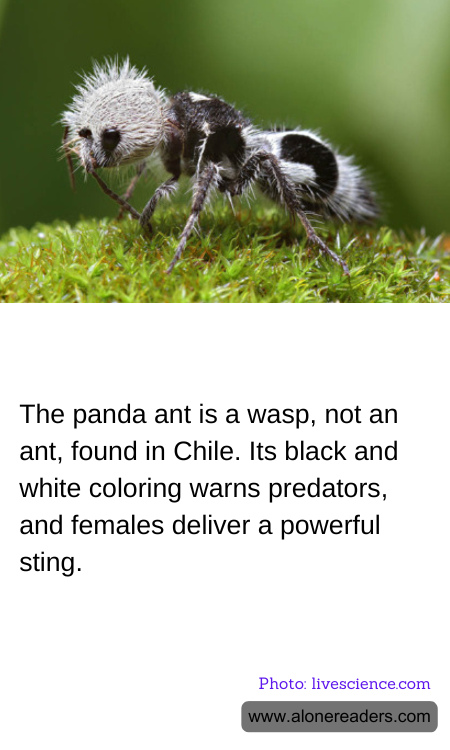
In the diverse world of insects, few creatures capture the imagination quite like the panda ant. Despite its name, the panda ant is not an ant at all but a fascinating species of wasp. Found primarily in the dry, arid regions of Chile, this unique insect is a member of the Mutillidae family, commonly known as velvet ants. The panda ant's striking appearance and intriguing behavior make it a subject of interest for both scientists and nature enthusiasts alike.
The panda ant earns its name from its distinctive black and white coloring, reminiscent of the beloved giant panda. This bold coloration is not just for show; it serves as a warning to potential predators. In the animal kingdom, bright and contrasting colors often signal danger, and the panda ant is no exception. Its vivid pattern acts as a deterrent, cautioning predators to think twice before making a meal of this tiny creature. This form of defense is known as aposematism, a survival strategy employed by many species to ward off threats.
One of the most remarkable features of the panda ant is the female's powerful sting. Unlike their male counterparts, female panda ants are wingless and spend much of their time on the ground. This might make them seem vulnerable, but their sting is a formidable weapon. The sting is not only painful but also delivers venom potent enough to deter much larger animals. This defense mechanism is crucial for the female panda ant, as it allows her to protect herself while searching for food or a suitable place to lay her eggs.
The panda ant's life cycle is as intriguing as its appearance. Females lay their eggs in the nests of ground-nesting bees or wasps. Once the eggs hatch, the larvae feed on the host's larvae, a behavior known as kleptoparasitism. This parasitic lifestyle ensures that the panda ant larvae have a ready supply of food, increasing their chances of survival in the harsh environments they inhabit.
Despite their fearsome sting and parasitic nature, panda ants play an important role in their ecosystem. They help control the populations of their host species, contributing to the balance of the local environment. Moreover, their striking appearance and unique behaviors make them a subject of fascination and study, helping scientists understand more about the complex interactions within ecosystems.
In conclusion, the panda ant is a remarkable example of nature's creativity and adaptability. Its misleading name, striking appearance, and powerful sting make it a standout in the insect world. While it may not be the cuddly creature its name suggests, the panda ant is a testament to the wonders of evolution and the intricate tapestry of life on Earth. Whether you're a budding entomologist or simply a curious observer, the panda ant offers a glimpse into the fascinating world of insects and the endless marvels it holds.
