More About This Card
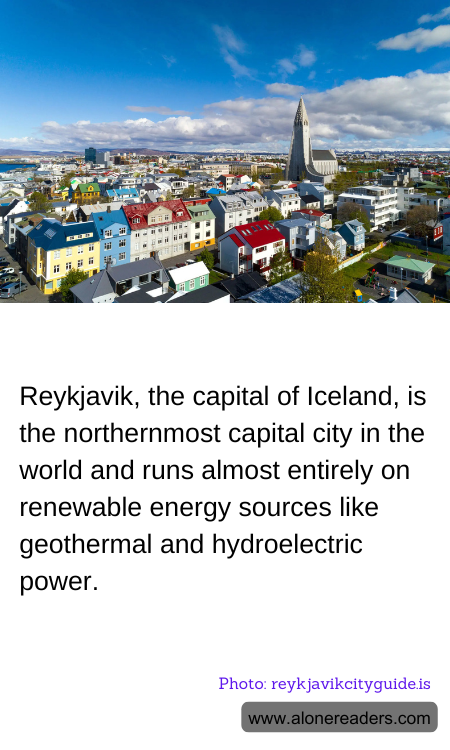
Reykjavik, the capital of Iceland, holds the unique distinction of being the northernmost capital city in the world. Nestled on the southwestern coast of Iceland, this vibrant city is not only known for its stunning landscapes and rich cultural heritage but also for its pioneering approach to sustainability. Reykjavik is a shining example of how a modern city can thrive while maintaining a deep commitment to environmental responsibility.
One of the most remarkable aspects of Reykjavik is its reliance on renewable energy sources. The city runs almost entirely on geothermal and hydroelectric power, setting a global benchmark for sustainable urban living. Geothermal energy, harnessed from the Earth's natural heat, is abundant in Iceland due to its unique geological features. This renewable resource provides the city with a stable and efficient energy supply, heating homes, businesses, and even the city's sidewalks during the harsh winter months. The use of geothermal energy significantly reduces Reykjavik's carbon footprint, making it one of the cleanest cities in terms of energy consumption.
In addition to geothermal power, Reykjavik also utilizes hydroelectric energy, which is generated from the country's numerous rivers and waterfalls. This clean and renewable energy source further enhances the city's commitment to sustainability. The combination of these two energy sources ensures that Reykjavik remains largely independent of fossil fuels, a feat that many cities around the world aspire to achieve. This dedication to renewable energy not only benefits the environment but also contributes to the city's economic stability by reducing reliance on imported fuels.
Reykjavik's commitment to sustainability extends beyond its energy sources. The city is a hub for innovation in green technology and sustainable practices. Public transportation in Reykjavik is increasingly focused on reducing emissions, with electric buses and an extensive network of cycling paths encouraging residents and visitors to opt for eco-friendly modes of travel. The city's waste management systems are also designed to minimize environmental impact, with a strong emphasis on recycling and composting.
The people of Reykjavik take great pride in their city's environmental achievements. This collective commitment to sustainability is reflected in the city's vibrant cultural scene, where art, music, and festivals often celebrate themes of nature and conservation. Visitors to Reykjavik are not only captivated by its breathtaking natural beauty but also inspired by its forward-thinking approach to urban living.
In conclusion, Reykjavik stands as a beacon of sustainability, demonstrating how a city can harness its natural resources to create a cleaner, greener future. Its reliance on geothermal and hydroelectric power sets a powerful example for cities worldwide, proving that it is possible to achieve economic growth and urban development while preserving the environment. As the northernmost capital city, Reykjavik's commitment to renewable energy and sustainable practices makes it a model for the world to follow.