More About This Card
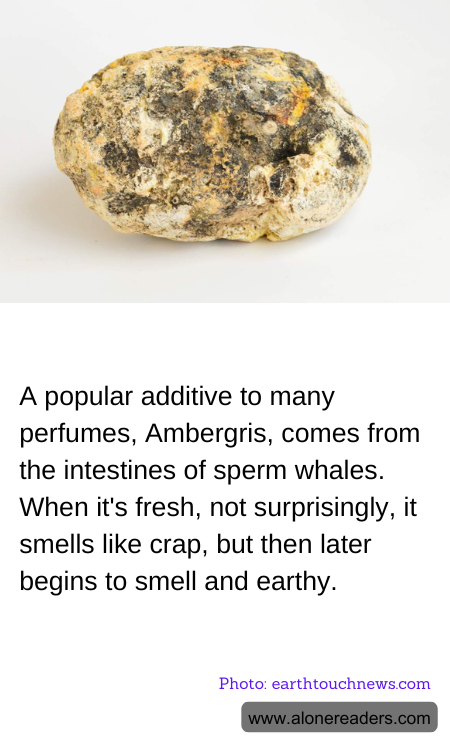
Ambergris, a substance shrouded in mystery and intrigue, has been a coveted ingredient in the world of perfumery for centuries. Its origins, however, are as unusual as they are fascinating. This rare and valuable material is produced in the intestines of sperm whales, and its journey from the ocean depths to the perfume bottle is as remarkable as the transformation it undergoes.
When ambergris is first expelled by the whale, it is far from the luxurious scent associated with high-end fragrances. In its fresh state, ambergris has a distinctly unpleasant odor, often compared to fecal matter. This initial scent is a result of its biological origins, as it is believed to form around indigestible substances in the whale's stomach, such as squid beaks, to protect the whale's digestive tract. Over time, however, ambergris undergoes a remarkable metamorphosis.
As ambergris floats on the ocean's surface, it is exposed to the elements, including sunlight, saltwater, and air. This exposure initiates a chemical transformation that can take years, during which the substance hardens and its scent evolves dramatically. What was once a foul-smelling mass becomes a coveted aromatic treasure, with a complex fragrance profile that is often described as earthy, sweet, and marine. This unique scent has made ambergris a prized component in the creation of perfumes, where it is used to enhance and fix the fragrance, adding depth and longevity.
The rarity of ambergris only adds to its allure. It is found sporadically along coastlines, often after being carried by ocean currents for years. This scarcity, combined with its unique properties, has made ambergris one of the most expensive raw materials in the world of perfumery. Despite its high value, the use of ambergris is a subject of ethical debate, as it is a byproduct of the sperm whale, a species that has been the focus of conservation efforts.
In modern perfumery, synthetic alternatives to ambergris have been developed, allowing perfumers to replicate its distinctive scent without relying on natural sources. These alternatives provide a sustainable option for fragrance creation, ensuring that the allure of ambergris can be enjoyed without impacting whale populations.
Ambergris remains a testament to nature's ability to transform the ordinary into the extraordinary. Its journey from the depths of the ocean to the heights of luxury perfumery is a story of transformation, rarity, and the enduring allure of the natural world. Whether in its natural form or as a synthetic replica, ambergris continues to captivate the senses and inspire the art of fragrance creation.