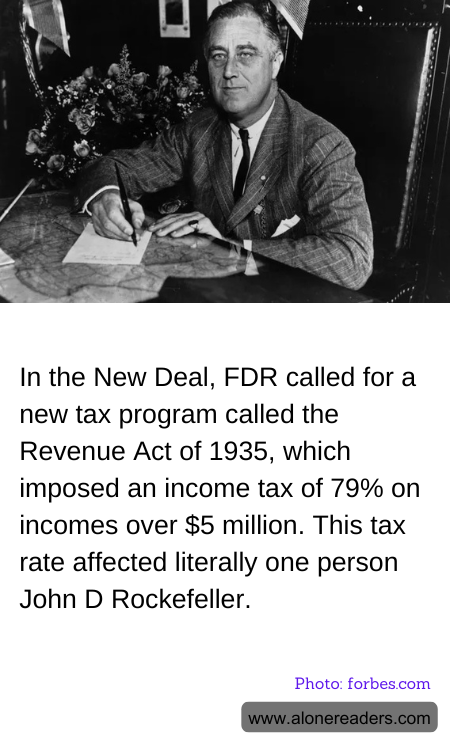
During the Great Depression, President Franklin D. Roosevelt introduced a series of programs and reforms known as the New Deal, aimed at revitalizing the American economy and providing relief to its citizens. Among these initiatives was the Revenue Act of 1935, a bold move to address economic inequality and increase federal revenue through taxation. This legislation introduced a progressive tax system, with the most notable feature being a staggering 79% income tax rate on incomes exceeding $5 million.
The Revenue Act of 1935 was part of Roosevelt's broader strategy to redistribute wealth and reduce the vast economic disparities that had contributed to the financial crisis. The act was designed to ensure that the wealthiest Americans contributed their fair share to the nation's recovery efforts. At the time, the idea of imposing such a high tax rate was revolutionary and sparked significant debate among policymakers and the public alike.
Interestingly, this exorbitant tax rate affected only one individual: John D. Rockefeller. As one of the wealthiest men in the world, Rockefeller's fortune was unparalleled, and his income far surpassed the $5 million threshold. The fact that this tax rate targeted a single person underscores the immense concentration of wealth during that era and highlights the challenges faced by the government in addressing economic inequality.
Despite its limited immediate impact, the Revenue Act of 1935 set a precedent for future tax policies aimed at wealth redistribution. It reflected Roosevelt's commitment to ensuring that the burden of economic recovery did not fall disproportionately on the shoulders of the working class. By targeting the nation's wealthiest individuals, the act sought to promote a more equitable distribution of resources and foster a sense of shared responsibility for the nation's well-being.
The introduction of such a high tax rate also served as a symbolic gesture, emphasizing the government's willingness to take bold steps in the face of economic adversity. It demonstrated Roosevelt's determination to challenge the status quo and implement policies that would benefit the broader population, rather than just the elite few.
While the Revenue Act of 1935 may have directly impacted only one person, its implications were far-reaching. It marked a significant shift in the American tax system and laid the groundwork for future reforms aimed at promoting economic fairness. The act remains a testament to Roosevelt's vision of a more just and equitable society, where the wealthiest citizens contribute to the nation's prosperity and help pave the way for a brighter future for all.
