More About This Card
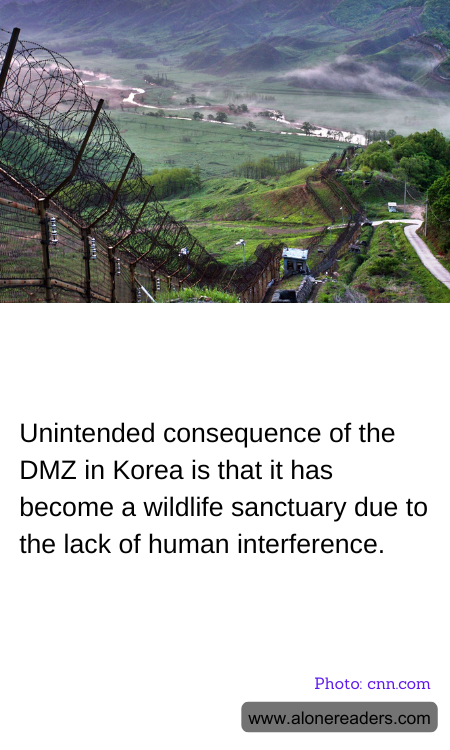
The Korean Demilitarized Zone (DMZ), a strip of land running across the Korean Peninsula, is one of the most heavily fortified borders in the world. Established in 1953 as a buffer zone between North and South Korea, it stretches approximately 250 kilometers long and 4 kilometers wide. While its primary purpose is to serve as a military boundary, an unintended yet remarkable consequence has emerged over the decades: the DMZ has transformed into a thriving wildlife sanctuary.
The absence of human activity in the DMZ has allowed nature to reclaim the land, creating a unique haven for biodiversity. This area, untouched by urban development and agricultural expansion, has become a refuge for numerous plant and animal species. The DMZ's diverse habitats, including forests, wetlands, and grasslands, support a wide array of wildlife, some of which are rare and endangered.
Among the notable inhabitants of the DMZ are the endangered Korean red-crowned cranes and white-naped cranes, which find sanctuary in the zone's wetlands. These majestic birds, symbols of longevity and peace in Korean culture, are able to thrive in the DMZ due to the lack of human disturbance. Additionally, the area is home to the elusive Amur leopard and the Asiatic black bear, both of which are critically endangered and benefit from the protected environment.
The DMZ's transformation into a de facto wildlife sanctuary highlights the resilience of nature when left undisturbed. The rich biodiversity found within its borders serves as a reminder of the potential for ecological recovery in areas where human presence is minimized. This unexpected development has attracted the attention of conservationists and researchers worldwide, who see the DMZ as a living laboratory for studying ecosystems that have been allowed to evolve naturally.
Efforts are underway to preserve this unique ecological treasure. Both South and North Korea, along with international organizations, have expressed interest in designating the DMZ as a UNESCO World Heritage site. Such recognition would not only protect the area's biodiversity but also promote peace and cooperation between the two Koreas through shared environmental stewardship.
The DMZ's evolution into a wildlife sanctuary is a testament to nature's ability to flourish in the absence of human interference. It offers a glimpse into what the world might look like if more areas were left to nature's devices. As discussions about the future of the Korean Peninsula continue, the DMZ stands as a powerful symbol of hope, demonstrating that even in places marked by conflict, life can find a way to thrive.