More About This Card
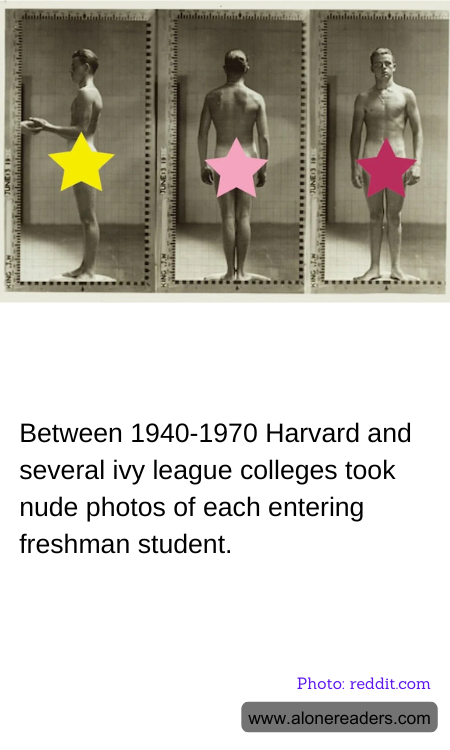
Between 1940 and 1970, several Ivy League institutions, including Harvard University, engaged in a peculiar practice that might seem astonishing by today's standards. During this period, these prestigious colleges took nude photographs of incoming freshmen as part of a larger anthropometric study. This practice, which spanned three decades, was initially intended to gather data for scientific research, but it has since become a curious footnote in the history of American higher education.
The origins of this practice can be traced back to the work of Dr. William Herbert Sheldon, a psychologist and physician who was interested in the relationship between body types and personality traits. Sheldon developed a theory known as "somatotyping," which categorized individuals into three primary body types: ectomorph, mesomorph, and endomorph. He believed that these body types could predict a person's temperament and potential for success. To support his research, Sheldon sought to collect a vast array of data, including nude photographs, to analyze the physical characteristics of young adults.
Harvard and other Ivy League schools, including Yale and Princeton, participated in this project, often without fully informing students of the purpose behind the photographs. The process was presented as a routine part of the physical examination required for incoming students. Many students complied, unaware that their images would be used for research that extended beyond the stated health assessments.
The practice continued for decades, largely unchallenged, until changing societal norms and growing concerns about privacy and consent led to its eventual discontinuation. By the late 1960s, the cultural climate had shifted significantly, and the idea of taking nude photographs of students without explicit consent became increasingly untenable. The project was quietly phased out, and the photographs were stored away, largely forgotten until they resurfaced in public discourse years later.
In retrospect, the practice of taking nude photographs of college students raises important questions about ethics, consent, and the role of scientific research in educational settings. While the intentions behind the project may have been rooted in scientific curiosity, the lack of transparency and informed consent would be considered unacceptable by today's ethical standards. This episode serves as a reminder of the evolving nature of research ethics and the importance of safeguarding individual rights and privacy.
Today, the legacy of this unusual chapter in Ivy League history is a testament to how far we have come in understanding and respecting personal boundaries. It highlights the need for ongoing vigilance in ensuring that research practices are conducted with integrity and respect for all participants. As we continue to explore the intersections of science, education, and ethics, the lessons learned from this period remain relevant, reminding us of the importance of transparency and consent in all aspects of academic inquiry.