More About This Card
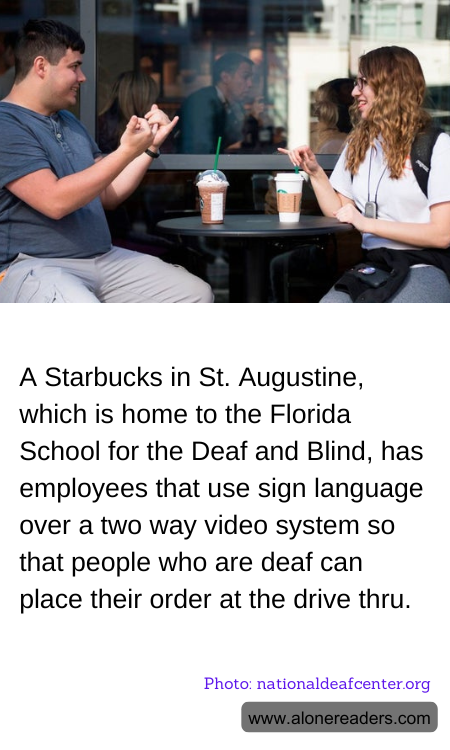
In the historic city of St. Augustine, Florida, a Starbucks location is making strides in inclusivity by implementing a unique system that caters to the needs of the deaf community. Situated near the Florida School for the Deaf and Blind, this Starbucks has introduced a two-way video system at its drive-thru, allowing deaf customers to place their orders using sign language. This innovative approach not only enhances the customer experience for those who are deaf but also sets a precedent for how businesses can adapt to serve all members of the community.
The two-way video system is a simple yet effective solution that bridges the communication gap between deaf customers and Starbucks employees. When a customer who is deaf arrives at the drive-thru, they can interact with a barista fluent in American Sign Language (ASL) through a video screen. This direct communication method ensures that orders are taken accurately and efficiently, eliminating the potential for misunderstandings that can occur with traditional ordering methods.
This initiative is particularly significant given the proximity of the Florida School for the Deaf and Blind, an institution that has been a cornerstone of the community since 1885. By acknowledging and addressing the needs of its neighbors, Starbucks is not only providing a valuable service but also fostering a sense of belonging and respect. The presence of employees who can communicate in ASL demonstrates a commitment to inclusivity and highlights the importance of accessibility in everyday interactions.
The impact of this system extends beyond just the convenience of ordering coffee. It serves as a powerful reminder of the importance of inclusivity in business practices. By accommodating the needs of the deaf community, Starbucks is setting an example for other businesses to follow. This initiative encourages other companies to consider how they can better serve diverse populations, ultimately leading to a more inclusive society.
Moreover, the implementation of the two-way video system has been met with positive feedback from both customers and employees. Deaf customers appreciate the ability to communicate in their preferred language, while employees find fulfillment in being able to provide excellent service to all patrons. This mutual benefit underscores the value of investing in inclusive technologies and practices.
In conclusion, the Starbucks in St. Augustine is a shining example of how businesses can adapt to meet the needs of all customers. By incorporating a two-way video system that allows for sign language communication, Starbucks is not only enhancing the customer experience for the deaf community but also promoting a culture of inclusivity and respect. This initiative serves as an inspiration for other businesses to explore innovative ways to accommodate diverse needs, ultimately contributing to a more inclusive and understanding society.