More About This Card
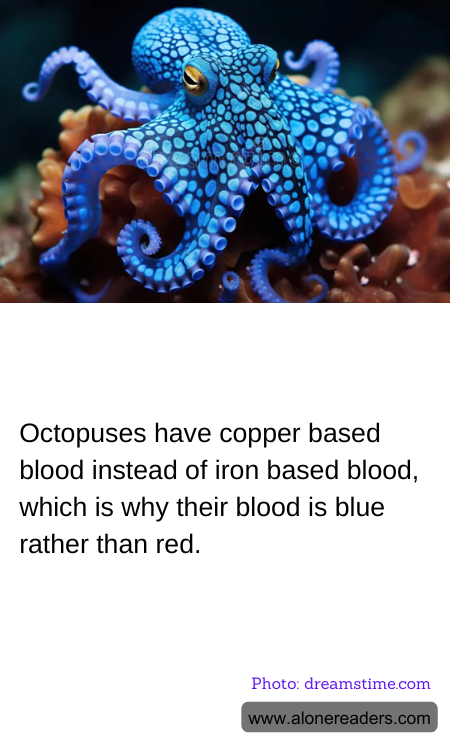
In the fascinating world of marine biology, octopuses stand out not only for their intelligence and unique behaviors but also for their intriguing physiological characteristics. One of the most captivating aspects of these cephalopods is their blue blood, a stark contrast to the red blood found in most other animals, including humans. This unusual hue is due to the presence of a copper-based molecule called hemocyanin, which serves a similar purpose to hemoglobin in vertebrates.
In humans and many other animals, blood gets its red color from hemoglobin, a protein that contains iron and is responsible for transporting oxygen throughout the body. When oxygen binds to the iron in hemoglobin, it gives blood its characteristic red color. However, octopuses have evolved differently. Their blood contains hemocyanin, which uses copper instead of iron to bind with oxygen. When oxygen is bound to hemocyanin, it imparts a blue color to the blood, giving octopuses their distinctive blue blood.
The choice of copper over iron in octopuses is not merely a quirk of nature but an adaptation to their environment. Octopuses often inhabit cold, low-oxygen environments in the ocean depths. Hemocyanin is more efficient than hemoglobin at transporting oxygen in these conditions, allowing octopuses to thrive where other creatures might struggle. This adaptation is crucial for their survival, enabling them to maintain their active lifestyles and complex behaviors even in the challenging conditions of the deep sea.
Moreover, the efficiency of hemocyanin in cold environments is complemented by the octopus's unique circulatory system. Octopuses have three hearts: two pump blood through the gills, where it picks up oxygen, and the third circulates it to the rest of the body. This system ensures that oxygen is delivered efficiently, supporting the octopus's high metabolic demands.
The blue blood of octopuses is a testament to the incredible diversity of life and the myriad ways in which organisms have adapted to their environments. It highlights the intricate balance of chemistry and biology that allows these creatures to thrive in their underwater world. For those who study marine life, the octopus serves as a reminder of the wonders of evolution and the endless possibilities it holds.
In conclusion, the blue blood of octopuses is more than just a curious fact; it is a window into the complex and adaptive nature of life in the ocean. By understanding these unique adaptations, we gain a deeper appreciation for the diversity of life on Earth and the remarkable ways in which organisms have evolved to meet the challenges of their environments. Whether you're a budding marine biologist or simply a curious observer of nature, the story of the octopus's blue blood is sure to inspire wonder and admiration.