More About This Card
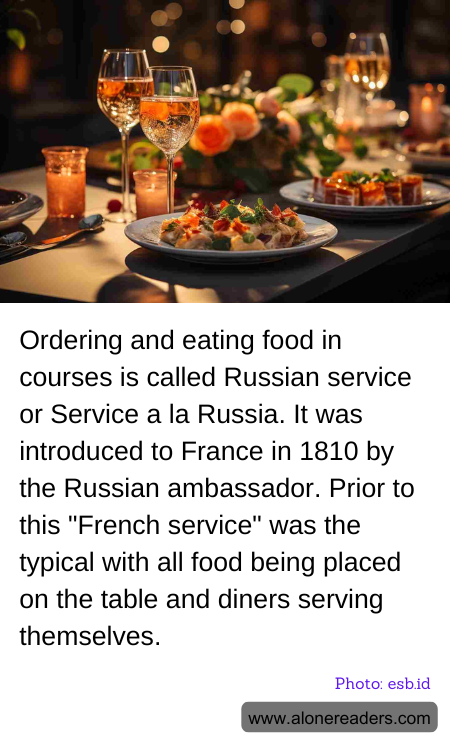
In the world of culinary traditions, the way food is served can be as significant as the food itself. One such tradition that has shaped dining experiences across the globe is the Russian service, also known as Service à la Russe. This style of serving food in courses was introduced to France in 1810 by the Russian ambassador, forever altering the landscape of fine dining.
Before the advent of Russian service, French service was the norm. In this style, all dishes were placed on the table simultaneously, and diners would serve themselves from the array of food presented. This method, while communal and convivial, often led to dishes cooling quickly and a lack of focus on individual courses. The introduction of Russian service brought a new level of sophistication and order to dining, emphasizing the enjoyment of each dish in its own right.
Russian service involves serving food in sequential courses, with each dish being brought to the table individually. This allows diners to appreciate the flavors and presentation of each course without distraction. The meal typically begins with appetizers, followed by soup, fish, the main course, and dessert, each served with a pause in between to savor the experience. This method not only enhances the dining experience but also allows for better temperature control of the dishes, ensuring that each course is enjoyed at its optimal state.
The impact of Russian service on dining culture was profound. It introduced a sense of ceremony and elegance to meals, transforming them into events to be savored rather than hurried through. The focus on individual courses allowed chefs to showcase their culinary skills and creativity, leading to more elaborate and refined dishes. This style of service also encouraged the development of specialized tableware and utensils, further elevating the dining experience.
Today, Russian service is a hallmark of fine dining establishments around the world. It has become synonymous with luxury and attention to detail, offering diners a chance to indulge in a carefully curated culinary journey. While French service still exists and is cherished for its communal nature, Russian service remains a testament to the enduring influence of cultural exchange in the culinary arts.
In essence, the introduction of Russian service to France marked a pivotal moment in the history of dining. It transformed meals into orchestrated experiences, where each course is a chapter in a story told through flavors and presentation. This tradition continues to captivate diners, inviting them to slow down and appreciate the artistry of a well-prepared meal.