More About This Card
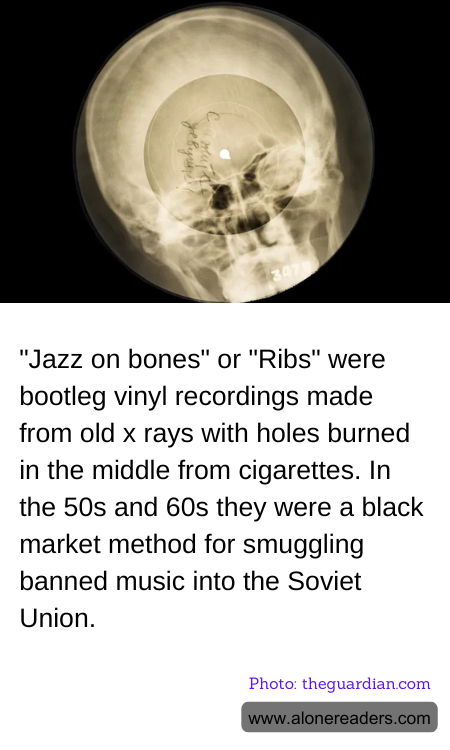
In the shadowy corridors of Soviet-era history, where censorship and control were the order of the day, a unique and ingenious form of rebellion emerged: "Jazz on bones" or "Ribs." These were bootleg vinyl recordings ingeniously crafted from discarded X-ray films, a testament to the human spirit's relentless pursuit of freedom and expression. During the 1950s and 60s, when the Soviet Union's iron grip extended to the arts, music from the West was deemed subversive and dangerous, leading to its ban. However, music lovers and dissidents found a way to circumvent these restrictions, giving birth to a fascinating chapter in the history of underground culture.
The process of creating these makeshift records was as creative as it was resourceful. Old X-ray films, often scavenged from hospital waste bins, became the canvas for these illicit recordings. The films were cut into circles, and a hole was burned in the center using a cigarette, allowing them to be played on a standard turntable. The result was a ghostly image of bones or organs, overlaid with the grooves of forbidden melodies. This eerie juxtaposition of life and art, of the human body and the human spirit, gave these records their haunting nickname: "Jazz on bones."
The music etched onto these X-rays was a diverse mix of jazz, rock 'n' roll, and other Western genres that were otherwise inaccessible to Soviet citizens. Artists like Elvis Presley, The Beatles, and Duke Ellington found their way into the hearts and homes of those yearning for a taste of the outside world. These records were not just about the music; they were a symbol of defiance, a quiet protest against the cultural isolation imposed by the state.
The distribution of these records was a risky endeavor, carried out by a network of underground enthusiasts who risked arrest and imprisonment. These individuals, known as "stilyagi" or "hipsters," were driven by a passion for music and a desire to connect with a world beyond their borders. They would sell or trade these records in secret, often at great personal risk, to keep the spirit of music alive in a society that sought to suppress it.
"Jazz on bones" represents more than just a clever workaround; it is a poignant reminder of the lengths to which people will go to preserve their cultural identity and freedom of expression. These records, with their haunting images and crackling sounds, are a testament to the resilience of the human spirit in the face of oppression. Today, they serve as a powerful symbol of resistance and creativity, a reminder that even in the darkest times, art finds a way to thrive.