More About This Card
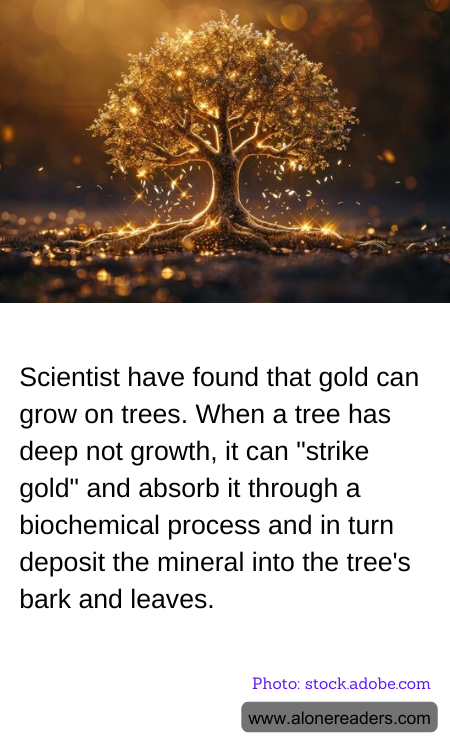
In a fascinating intersection of nature and science, researchers have discovered that gold can indeed grow on trees. This remarkable finding has captivated the scientific community and the general public alike, as it unveils a unique natural process where trees can absorb gold particles from the soil and deposit them in their bark and leaves. This phenomenon occurs when trees extend their roots deep into the earth, tapping into gold-rich deposits and incorporating the precious metal into their biological systems.
The process begins with the tree's roots, which penetrate the soil in search of nutrients and water. In areas where gold deposits are present, these roots can encounter microscopic particles of gold. Through a complex biochemical process, the tree absorbs these particles and transports them throughout its system. Over time, the gold accumulates in the tree's bark and leaves, creating a natural repository of the mineral. This process does not harm the tree; rather, it is a testament to the incredible adaptability and resourcefulness of nature.
This discovery has significant implications for both the scientific community and the mining industry. For scientists, it provides a new avenue to study the interactions between plants and minerals, offering insights into how trees can survive and thrive in mineral-rich environments. For the mining industry, this phenomenon could revolutionize the way gold deposits are located. Instead of relying solely on traditional methods of exploration, prospectors could use trees as natural indicators of gold deposits, potentially reducing the environmental impact of mining activities.
The presence of gold in trees also raises intriguing questions about the potential for other minerals to be absorbed and deposited in a similar manner. Researchers are now exploring whether other valuable metals, such as copper or silver, might also be found in trees growing in mineral-rich areas. This line of inquiry could open up new possibilities for sustainable resource extraction and environmental conservation.
While the idea of gold growing on trees might sound like a fairy tale, it is a real and scientifically validated phenomenon. It serves as a reminder of the wonders of the natural world and the intricate connections between living organisms and their environments. As research continues, we may discover even more surprising ways in which nature can inspire and inform human endeavors. For now, the notion of gold-laden trees stands as a testament to the ingenuity of nature and the endless possibilities that await those who seek to understand it.