More About This Card
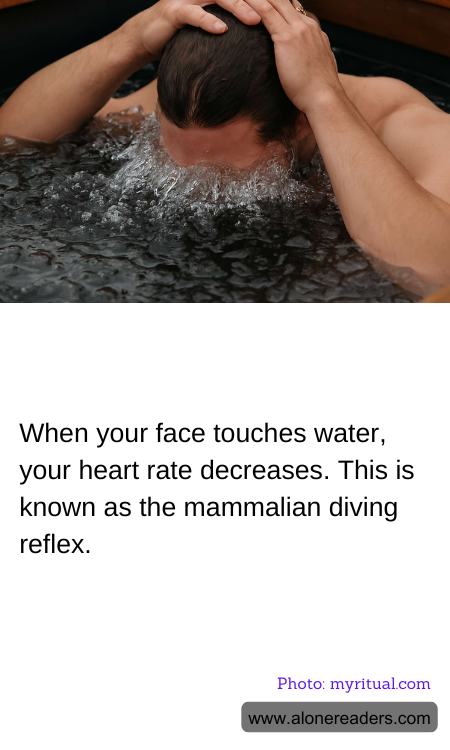
The human body is a marvel of evolutionary adaptation, equipped with mechanisms that have allowed our ancestors to survive in diverse environments. One such fascinating physiological response is the mammalian diving reflex, a phenomenon that occurs when your face comes into contact with water, leading to a decrease in heart rate. This reflex is not only intriguing but also serves as a testament to our shared ancestry with other aquatic mammals.
The mammalian diving reflex is an automatic response that is triggered by cold water touching the face. This reflex is most pronounced in cold water, but it can occur in any water temperature. When the face is submerged, receptors in the skin send signals to the brain, which then activates the parasympathetic nervous system. This results in a slowing of the heart rate, a process known as bradycardia. The heart rate can decrease by as much as 10 to 25 percent, depending on the individual and the water temperature.
This reflex is not unique to humans; it is observed in many aquatic mammals such as seals, dolphins, and whales. In these animals, the diving reflex is crucial for conserving oxygen while submerged, allowing them to stay underwater for extended periods. For humans, while we are not naturally aquatic, this reflex still plays a role in our survival. It helps to optimize oxygen use by reducing the heart rate and redirecting blood flow to vital organs like the brain and heart, which is particularly useful in situations of accidental submersion.
The diving reflex is more pronounced in children than in adults, which is thought to be an evolutionary adaptation to protect young ones who might accidentally fall into water. This heightened response in children suggests that the reflex may have played a significant role in human survival throughout history, particularly in environments where water was a constant presence.
While the mammalian diving reflex is a natural and automatic response, it has also been harnessed in various therapeutic and recreational activities. For instance, free divers, who dive without the use of breathing apparatus, rely on this reflex to extend their time underwater. Additionally, the calming effect of the reflex has been explored in therapeutic settings to help manage stress and anxiety.
In conclusion, the mammalian diving reflex is a remarkable example of how our bodies are equipped with ancient survival mechanisms. It serves as a reminder of our connection to the natural world and our shared evolutionary history with other mammals. Whether for survival, sport, or therapy, this reflex continues to be a subject of fascination and study, highlighting the intricate and adaptive nature of the human body.