More About This Card
In today's digital age, smartphones have become an integral part of our daily lives, serving as our personal assistants, communication devices, and even security vaults. One of the most fascinating features that modern smartphones offer is the fingerprint scanner. This technology, which once seemed like science fiction, is now a common security measure that provides both convenience and enhanced protection for users.
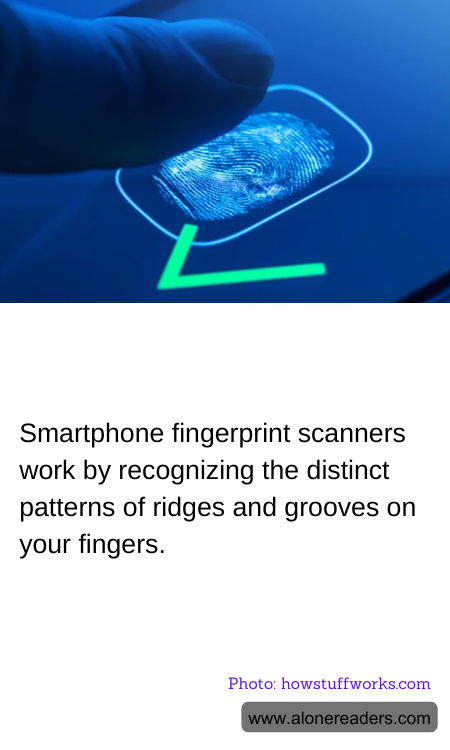
Fingerprint scanners on smartphones work by recognizing the unique patterns of ridges and grooves on a person's fingers. Each individual has a distinct fingerprint, which makes this method of identification highly reliable. The science behind this technology is both intricate and fascinating. When you place your finger on the scanner, it captures an image of your fingerprint. This image is then analyzed by the phone's software, which identifies the unique patterns and stores them as a digital representation. When you attempt to unlock your phone, the scanner compares the stored fingerprint data with the new scan to verify your identity.
There are several types of fingerprint scanners used in smartphones, including optical, capacitive, and ultrasonic. Optical scanners use light to capture an image of the fingerprint, while capacitive scanners use electrical currents to map the ridges and valleys of the fingerprint. Ultrasonic scanners, on the other hand, use sound waves to create a 3D image of the fingerprint. Each of these technologies has its own advantages, with ultrasonic scanners being the most advanced, offering higher accuracy and security.
The use of fingerprint scanners has revolutionized smartphone security by providing a quick and easy way to unlock devices without the need for passwords or PINs. This not only enhances user convenience but also significantly reduces the risk of unauthorized access. Moreover, fingerprint authentication is increasingly being used for other applications, such as authorizing mobile payments and accessing secure apps, further highlighting its versatility and importance.
Despite their many benefits, fingerprint scanners are not without limitations. Factors such as dirt, moisture, or cuts on the finger can sometimes interfere with the scanner's ability to accurately read a fingerprint. Additionally, while the technology is highly secure, it is not entirely foolproof. However, advancements in technology continue to improve the accuracy and reliability of fingerprint scanners, making them an indispensable feature in modern smartphones.
In conclusion, smartphone fingerprint scanners are a testament to how far technology has come in enhancing user security and convenience. By recognizing the distinct patterns of ridges and grooves on our fingers, these scanners provide a seamless and secure way to protect our personal information. As technology continues to evolve, we can expect even more sophisticated and secure methods of biometric authentication to emerge, further safeguarding our digital lives.