More About This Card
Orchids, one of the most diverse and widespread families of flowering plants, are renowned for their stunning beauty and intricate blooms. However, beyond their aesthetic appeal, orchids hold a fascinating secret: they produce the smallest seeds in the world. This remarkable feature is not only a testament to the plant's evolutionary ingenuity but also plays a crucial role in its survival and propagation.
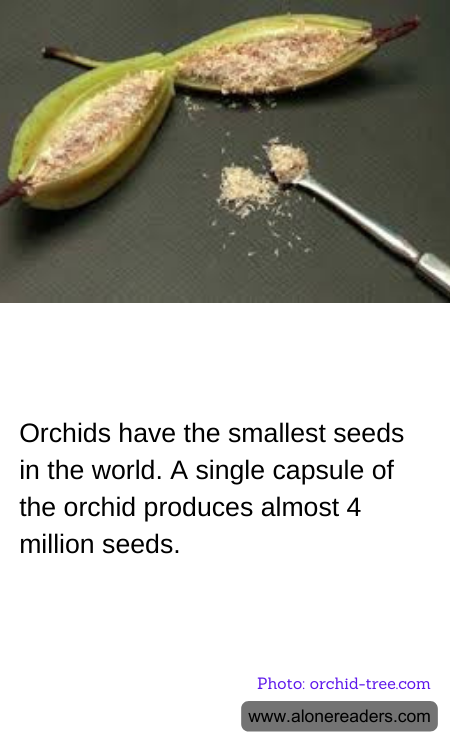
The seeds of orchids are so minuscule that they are often compared to dust particles. In fact, they are so tiny that they lack the nutrient-rich endosperm found in most other seeds. This absence of stored food means that orchid seeds rely heavily on a symbiotic relationship with specific fungi to germinate and grow. These fungi provide the necessary nutrients that the seeds need to develop into seedlings, a process that underscores the intricate interdependence found in nature.
A single orchid capsule, which is the fruit of the plant, can produce an astonishing number of seeds—up to 4 million. This prolific seed production is a survival strategy that compensates for the seeds' low chances of successful germination and establishment in the wild. By releasing millions of seeds into the environment, orchids increase the likelihood that at least a few will land in a suitable location where the necessary fungi are present, allowing them to grow and eventually bloom.
The sheer number of seeds produced by orchids also highlights the plant's adaptability and resilience. Orchids can be found in a wide range of habitats, from tropical rainforests to arid deserts, and their ability to produce vast quantities of seeds ensures that they can colonize new areas and maintain their populations even in challenging conditions. This adaptability has contributed to the orchid family's incredible diversity, with over 25,000 species identified worldwide.
For enthusiasts and botanists alike, the orchid's seed production is a subject of endless fascination. It serves as a reminder of the complex and often hidden mechanisms that plants use to thrive and reproduce. The orchid's tiny seeds, though seemingly insignificant, play a vital role in the plant's life cycle and its continued existence on our planet.
In conclusion, the orchid's ability to produce the smallest seeds in the world, coupled with its prolific seed output, is a remarkable example of nature's ingenuity. This unique characteristic not only ensures the survival of these exquisite plants but also enriches our understanding of the delicate balance within ecosystems. Whether admired for their beauty or studied for their biological significance, orchids continue to captivate and inspire people of all ages.