More About This Card
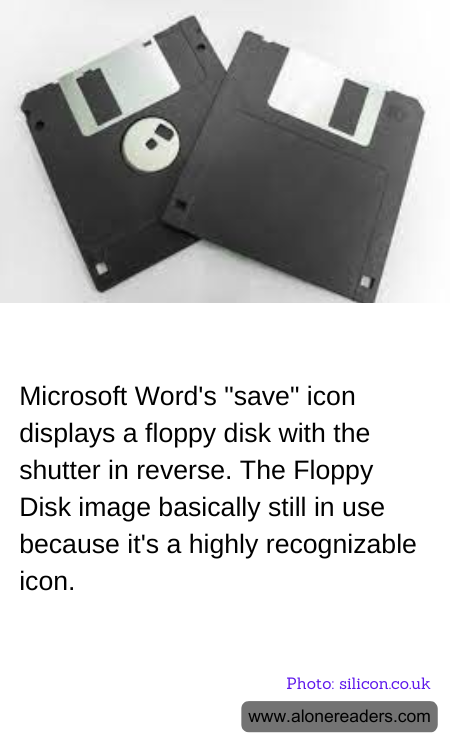
In the digital age, where technology evolves at a breakneck pace, certain symbols remain steadfast in their utility and recognition. One such enduring icon is the floppy disk, which continues to represent the "save" function in Microsoft Word and many other software applications. Despite the fact that floppy disks have long been obsolete in terms of practical use, their image persists as a universally understood symbol for saving files. Interestingly, the depiction of the floppy disk in Microsoft Word's "save" icon features the shutter in reverse, a detail that often goes unnoticed but adds a layer of curiosity to its design.
The floppy disk, once a staple of data storage in the late 20th century, has become a relic of the past, replaced by more advanced and efficient storage solutions like USB drives, cloud storage, and solid-state drives. However, its image has transcended its physical utility, becoming a cultural icon that signifies the act of saving data. This is largely due to its widespread use during the formative years of personal computing, which ingrained its image into the collective consciousness of computer users worldwide. As a result, even those who have never used a floppy disk in real life can easily recognize the symbol and associate it with saving work.
The decision to continue using the floppy disk as a save icon is rooted in its recognizability. In design, especially in user interface design, familiarity is key. Users are more likely to understand and interact with symbols that they recognize, which is why the floppy disk remains a staple in software design. Its simplicity and distinct shape make it an ideal candidate for a small icon that needs to convey a specific function quickly and effectively. The reverse shutter detail, while not functionally significant, adds a touch of uniqueness to the icon, perhaps serving as a subtle nod to its historical context.
Moreover, the floppy disk icon serves as a bridge between generations of computer users. For older users, it evokes a sense of nostalgia, recalling the early days of personal computing. For younger users, it represents a piece of digital history, a symbol of how far technology has come. This cross-generational appeal enhances its effectiveness as an icon, ensuring that it remains relevant even as technology continues to advance.
In conclusion, the floppy disk icon in Microsoft Word, with its reversed shutter, is a testament to the power of visual symbols in technology. Its continued use underscores the importance of recognizability and familiarity in design, while also highlighting the cultural significance of historical technology. As long as the need for intuitive and universally understood icons persists, the floppy disk will likely remain a fixture in the digital landscape, a small but enduring reminder of the past in our ever-evolving technological world.