More About This Card
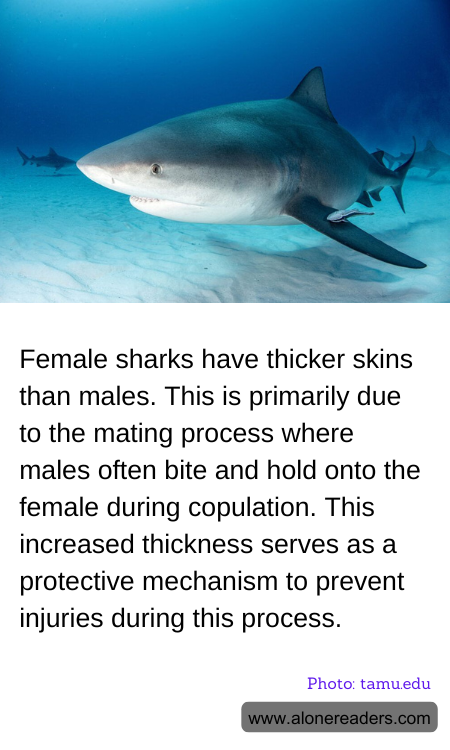
In the vast and mysterious world of the ocean, sharks stand out as some of the most fascinating and misunderstood creatures. Among the many intriguing aspects of their biology is the fact that female sharks possess thicker skin than their male counterparts. This unique adaptation is not merely a random occurrence but a vital evolutionary trait linked to the mating practices of these marine predators.
The mating process in sharks is a complex and often aggressive interaction. Unlike many other species, shark mating involves the male biting and holding onto the female to maintain position during copulation. This behavior, while essential for successful reproduction, poses a risk of injury to the female. To mitigate this risk, female sharks have evolved to have skin that is significantly thicker than that of males. This increased thickness acts as a protective barrier, reducing the likelihood of injury from the male's bites.
The skin of a shark is composed of a tough, leathery layer known as the dermis, which is covered by tiny, tooth-like structures called dermal denticles. These denticles provide a degree of armor, but in females, the dermis itself is notably thicker. This adaptation is crucial for their survival, as it allows females to endure the rigors of mating without sustaining serious harm. The thickness of the skin varies among species, but in some cases, it can be up to twice as thick in females as in males.
This protective mechanism is a testament to the remarkable ways in which nature ensures the continuation of species. By developing thicker skin, female sharks are better equipped to handle the physical demands of mating, thereby increasing their chances of successful reproduction. This adaptation not only highlights the resilience of these creatures but also underscores the intricate balance of their ecosystems.
Understanding the reasons behind the thicker skin of female sharks provides valuable insight into the complex dynamics of shark behavior and reproduction. It also serves as a reminder of the importance of preserving these incredible animals and their habitats. As apex predators, sharks play a crucial role in maintaining the health of marine ecosystems, and their unique adaptations are a key part of their survival strategy.
In conclusion, the thicker skin of female sharks is a fascinating example of evolutionary adaptation driven by the demands of reproduction. This natural armor allows them to withstand the challenges of mating, ensuring the survival of their species. As we continue to study and learn about these remarkable creatures, it is essential to appreciate the delicate balance of nature and the incredible adaptations that have allowed sharks to thrive for millions of years.