More About This Card
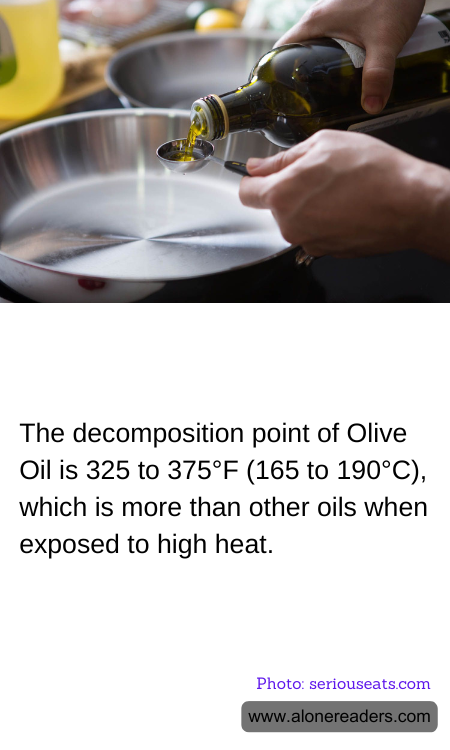
Olive oil, a staple in Mediterranean cuisine, is renowned for its health benefits and rich flavor. One of its notable characteristics is its decomposition point, which ranges from 325 to 375°F (165 to 190°C). This range is higher than many other oils, making olive oil a versatile choice for various cooking methods, including sautéing and frying.
The decomposition point, often confused with the smoke point, is the temperature at which an oil begins to break down and lose its nutritional value. When oils decompose, they can produce harmful compounds and lose their beneficial properties. Olive oil's higher decomposition point means it can withstand higher temperatures before reaching this stage, making it a more stable option for cooking.
Compared to other oils, such as canola or sunflower oil, which have lower decomposition points, olive oil maintains its integrity better under heat. This stability is attributed to its high content of monounsaturated fats and antioxidants, which not only contribute to its health benefits but also enhance its resistance to heat-induced degradation. These properties make olive oil an excellent choice for those who wish to retain the nutritional quality of their meals while cooking at higher temperatures.
In addition to its stability, olive oil offers a unique flavor profile that can enhance the taste of dishes. Its fruity and sometimes peppery notes can add depth to a variety of recipes, from simple salads to complex sauces. This versatility, combined with its health benefits, makes olive oil a preferred choice for many home cooks and professional chefs alike.
However, it's important to note that while olive oil can handle higher temperatures, it is still best used within its recommended range to maximize its health benefits. Cooking at excessively high temperatures can still lead to the breakdown of its beneficial compounds. Therefore, for high-heat cooking methods like deep frying, it's advisable to monitor the oil's temperature closely.
In conclusion, olive oil's decomposition point of 325 to 375°F (165 to 190°C) makes it a superior choice for cooking compared to many other oils. Its ability to withstand higher temperatures without losing its nutritional value, combined with its distinctive flavor, makes it a valuable addition to any kitchen. Whether you're sautéing vegetables or crafting a delicate sauce, olive oil provides a healthy and flavorful foundation for your culinary creations.