More About This Card
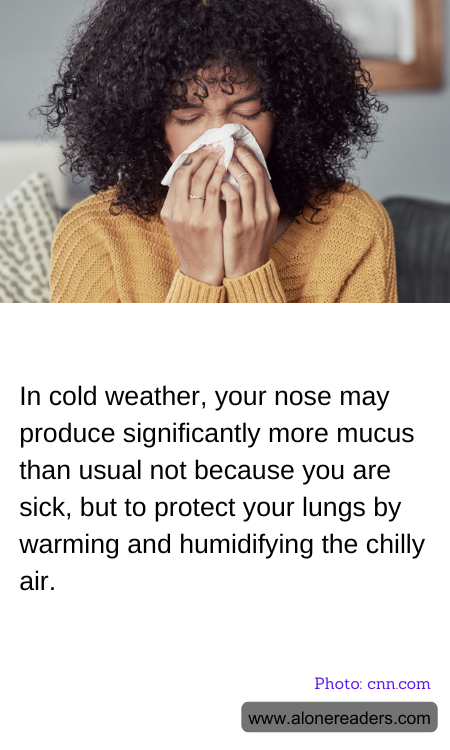
As the temperature drops and winter sets in, many people notice an increase in nasal mucus production. While it might be tempting to assume that this is a sign of an impending cold or flu, the reality is quite different. The body's response to cold weather is a fascinating example of its ability to adapt and protect itself. The increased mucus production is not a sign of illness but rather a protective mechanism designed to safeguard the lungs from the harsh, chilly air.
When we breathe in cold air, it can be quite a shock to our respiratory system. The airways in our nose and throat are sensitive and require a certain level of warmth and humidity to function optimally. Cold air is typically dry, and when it enters the nasal passages, it can cause irritation. To counteract this, the body increases mucus production. This mucus acts as a humidifier, adding moisture to the air before it reaches the lungs. Additionally, the mucus helps to warm the air, ensuring that by the time it reaches the more delicate tissues of the lungs, it is at a more suitable temperature.
This process is crucial for maintaining respiratory health during the colder months. The lungs are particularly sensitive to cold, dry air, which can exacerbate conditions like asthma or lead to respiratory discomfort. By warming and humidifying the air, the mucus serves as a first line of defense, reducing the risk of irritation and potential respiratory issues. This natural response is a testament to the body's remarkable ability to protect itself from environmental challenges.
Moreover, the mucus also plays a role in trapping and filtering out potential pathogens and particles that might be present in the air. This is an added layer of protection, ensuring that the air reaching the lungs is not only warm and moist but also cleaner. While the increased mucus production might be inconvenient, leading to a runny nose or the need to frequently blow one's nose, it is a small price to pay for the protection it offers.
Understanding this natural response can help alleviate concerns about increased mucus production during cold weather. It's a reminder that not every sniffle or runny nose is a sign of illness. Instead, it is often a sign that the body is doing its job, adapting to the environment, and ensuring that the respiratory system remains healthy and functional. So, the next time you find yourself reaching for a tissue on a chilly day, take comfort in knowing that your body is simply taking care of you in the best way it knows how.