More About This Card
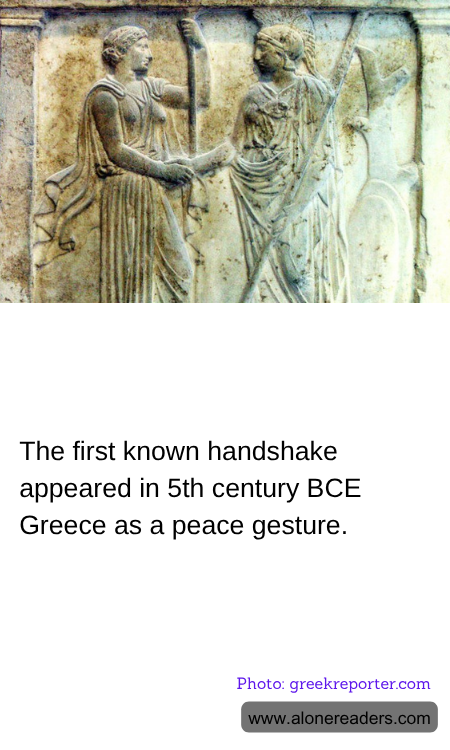
The handshake, a gesture so ubiquitous in modern society, has a rich and storied history that traces back to ancient times. The first known depiction of a handshake dates to the 5th century BCE in Greece, where it was used as a symbol of peace and mutual respect. This ancient gesture, captured in art and literature, reveals much about the cultural and social dynamics of the time.
In ancient Greece, the handshake was more than just a simple greeting; it was a powerful symbol of trust and equality. The gesture was often depicted in funerary art, where it symbolized the bond between the living and the deceased, suggesting a continuity of relationships beyond life. This portrayal underscores the handshake's role as a bridge between individuals, transcending the boundaries of life and death. The handshake was also a common motif in Greek art, appearing on pottery and sculptures, which indicates its significance in daily life and its role in formalizing agreements and alliances.
The origins of the handshake as a peace gesture are rooted in its practical function. By extending an open hand, individuals demonstrated that they were unarmed, fostering an environment of trust and cooperation. This simple act of showing an empty hand was a universal sign of goodwill, reducing the likelihood of conflict and promoting peaceful interactions. In a time when personal and political alliances were crucial for survival, the handshake served as a non-verbal contract, binding individuals in a mutual understanding of peace and collaboration.
As the centuries passed, the handshake evolved but retained its core symbolism. It spread beyond Greece, becoming a common practice in various cultures around the world. Despite its ancient origins, the handshake remains a relevant and powerful gesture today, embodying the same principles of trust, equality, and peace that it did over two millennia ago. In modern times, it is used in a multitude of contexts, from business meetings to personal greetings, continuing to serve as a universal symbol of goodwill and mutual respect.
The enduring nature of the handshake speaks to its effectiveness as a means of communication. In a world where words can often be misunderstood or lost in translation, the handshake provides a clear and direct message of intent. It is a testament to the human desire for connection and understanding, transcending cultural and linguistic barriers. As we continue to navigate an increasingly complex and interconnected world, the handshake remains a simple yet profound gesture, reminding us of our shared humanity and the timeless values of peace and cooperation.