More About This Card
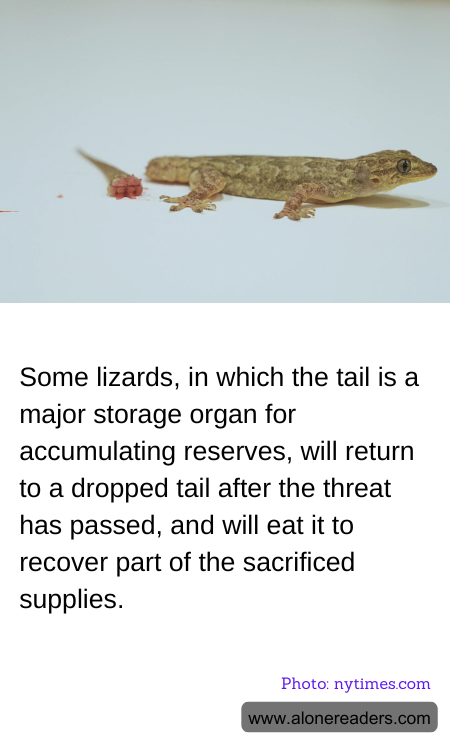
In the fascinating world of reptiles, lizards have developed a remarkable survival mechanism that involves the ability to shed their tails when threatened by predators. This process, known as autotomy, allows lizards to escape while leaving a part of themselves behind to distract their pursuer. However, what is even more intriguing is the behavior of some lizard species that return to their dropped tails once the danger has passed, consuming them to reclaim valuable nutrients and energy reserves.
The tail of a lizard serves multiple purposes beyond mere balance and mobility. For many species, it acts as a crucial storage organ, accumulating fats and other reserves that can be vital for survival during periods of scarcity. When a lizard drops its tail, it sacrifices not only a part of its body but also a significant portion of its stored resources. This makes the act of returning to consume the dropped tail a practical strategy to mitigate the loss.
This behavior is particularly beneficial in environments where food is not always readily available. By eating their own tails, lizards can recover some of the energy and nutrients they sacrificed, aiding in their recovery and helping them to grow a new tail more efficiently. The regrowth of a tail, while not identical to the original, is a resource-intensive process. Therefore, reclaiming some of the lost reserves can be crucial for the lizard's continued survival and reproductive success.
The act of consuming a dropped tail also highlights the adaptability and resourcefulness of these reptiles. It underscores the evolutionary pressures that have shaped their behavior, allowing them to maximize their chances of survival in a world full of predators and unpredictable food supplies. This behavior is a testament to the intricate balance of nature, where every action has a purpose and contributes to the overall fitness of the organism.
For those observing lizards in the wild, this behavior may go unnoticed, as it often occurs after the immediate threat has passed. However, it serves as a reminder of the complex and often hidden strategies animals employ to thrive in their natural habitats. The ability of lizards to not only escape danger but also to reclaim lost resources is a remarkable example of nature's ingenuity.
In conclusion, the practice of returning to and consuming a dropped tail is a fascinating aspect of lizard behavior that underscores the importance of resource management in the animal kingdom. It highlights the delicate balance between survival and sacrifice, showcasing the incredible adaptability of these reptiles. As we continue to study and understand these behaviors, we gain greater insight into the resilience and resourcefulness of life on Earth.