More About This Card
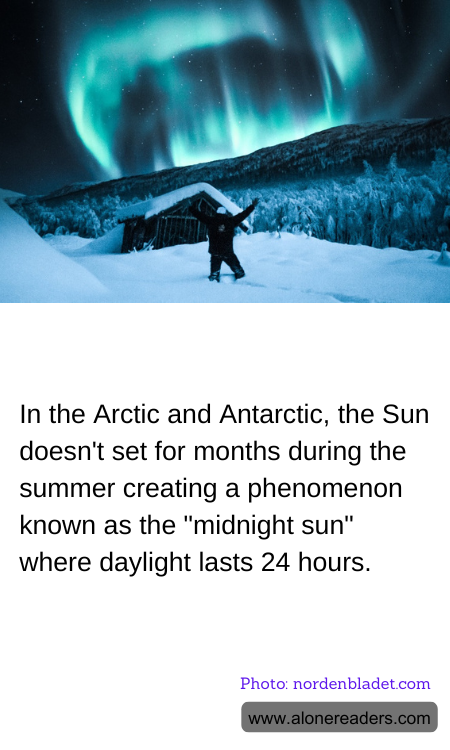
In the remote and icy realms of the Arctic and Antarctic, a remarkable natural phenomenon occurs each summer that defies the usual rhythm of day and night. Known as the "midnight sun," this event transforms the polar regions into a land of perpetual daylight, where the sun remains visible at local midnight, casting a golden glow over the landscape. This spectacle is not only a marvel of nature but also a testament to the unique tilt and rotation of our planet.
The midnight sun occurs because of the Earth's axial tilt of approximately 23.5 degrees. During the summer months, either the North Pole or the South Pole is tilted toward the Sun. This tilt ensures that the Sun does not dip below the horizon for an extended period, resulting in continuous daylight. In the Arctic, this phenomenon typically begins around the summer solstice in June and can last until late August, while in the Antarctic, it occurs from late November to early February.
For those living in or visiting these polar regions, the midnight sun offers a unique experience that can be both exhilarating and disorienting. The constant daylight allows for extended exploration and activities that would otherwise be limited by darkness. Adventurers can hike, kayak, or even take a midnight stroll under the sunlit sky, experiencing the natural world in a way that is impossible elsewhere. However, the unending daylight can also disrupt natural sleep patterns, requiring individuals to adapt their routines and often use blackout curtains to simulate night.
The cultural impact of the midnight sun is significant, influencing the traditions and lifestyles of indigenous peoples and modern inhabitants alike. In regions like Norway, Sweden, and Finland, the phenomenon is celebrated with festivals and gatherings that embrace the long days and the energy they bring. These celebrations often include music, dancing, and communal meals, reflecting a deep appreciation for the light and warmth of the sun after the long, dark winter months.
While the midnight sun is a captivating spectacle, it also serves as a reminder of the delicate balance of our planet's ecosystems. The extended daylight impacts local wildlife, influencing feeding and breeding patterns. Animals such as reindeer and seabirds have adapted to take advantage of the continuous light, while others must adjust their behaviors to cope with the changes in their environment.
In conclusion, the midnight sun is a breathtaking phenomenon that highlights the wonders of our planet's natural cycles. It offers a unique opportunity to experience the world in a different light, literally and figuratively. Whether you are a scientist studying the effects of prolonged daylight or a traveler seeking the thrill of endless days, the Arctic and Antarctic's midnight sun is a testament to the beauty and complexity of Earth's natural wonders.