More About This Card
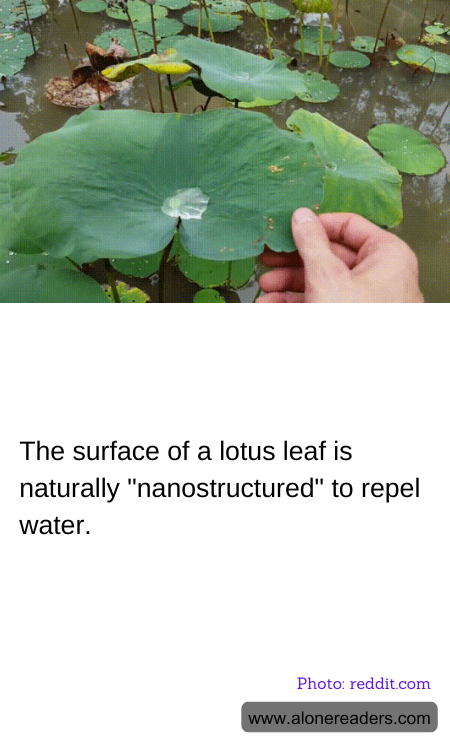
In the natural world, few phenomena are as captivating as the water-repellent surface of a lotus leaf. This remarkable feature, often referred to as the "lotus effect," is a testament to the intricate designs found in nature. The surface of a lotus leaf is naturally "nanostructured," meaning it is covered with microscopic bumps and ridges that create a unique interaction with water. This nanostructure is not only a marvel of natural engineering but also a source of inspiration for scientific and technological advancements.
The lotus plant, revered in many cultures for its beauty and symbolism, possesses leaves that remain pristine despite being in muddy waters. This cleanliness is attributed to the leaf's ability to repel water, a property known as superhydrophobicity. When water droplets land on the surface of a lotus leaf, they do not spread out but instead form nearly perfect spheres. This is due to the combination of the leaf's waxy coating and its nanostructured surface, which minimizes the contact area between the water and the leaf. As a result, water droplets roll off the leaf, taking dirt and debris with them, effectively cleaning the surface.
The nanostructure of the lotus leaf is composed of tiny bumps, each just a few nanometers in size. These bumps create a rough surface that traps air, reducing the adhesive forces between the water and the leaf. This phenomenon is a classic example of how nature uses nanotechnology to solve practical problems. The lotus effect has inspired scientists and engineers to develop new materials and coatings that mimic this natural water-repellent property. Such innovations have applications in a wide range of fields, from self-cleaning surfaces and water-resistant fabrics to anti-fogging and anti-icing technologies.
Understanding the lotus effect also provides insight into the broader field of biomimicry, where natural processes and structures are studied and emulated to solve human challenges. By examining how the lotus leaf achieves its water-repellent properties, researchers can design materials that offer similar benefits, potentially leading to more sustainable and efficient solutions. The study of the lotus leaf's surface has also contributed to advancements in nanotechnology, as scientists seek to replicate its structure at a microscopic level.
The lotus leaf's ability to repel water is a fascinating example of nature's ingenuity. Its nanostructured surface not only keeps the leaf clean but also serves as an inspiration for technological innovations that can improve our daily lives. As we continue to explore and understand the natural world, the lessons learned from the lotus leaf remind us of the potential that lies in harnessing nature's designs to create a better future.