More About This Card
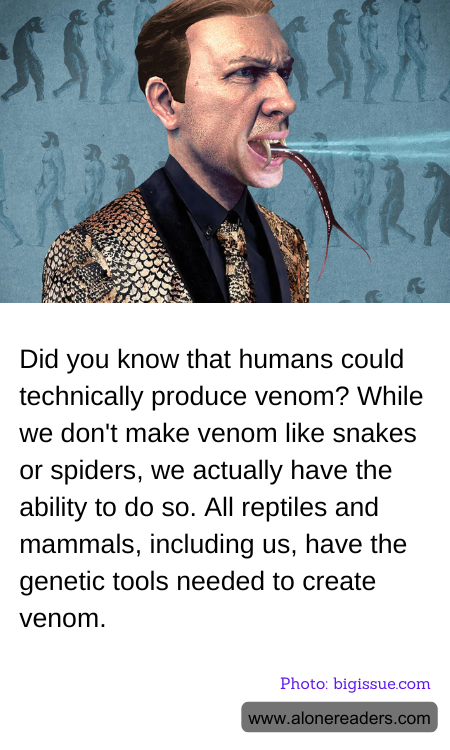
The idea that humans could technically produce venom might sound like something out of a science fiction novel, but recent scientific discoveries suggest that this is not entirely far-fetched. While we don't possess the venomous capabilities of snakes or spiders, research indicates that humans, along with all reptiles and mammals, have the genetic tools necessary to create venom. This fascinating revelation opens up a new understanding of our evolutionary history and the potential hidden within our DNA.
Venom is a complex cocktail of proteins and enzymes that certain animals use for defense or to immobilize prey. It is a trait that has evolved independently in various species, from the fangs of a cobra to the stingers of a scorpion. The key to this ability lies in specific genes that code for venom production. Remarkably, scientists have discovered that these genes are not exclusive to traditionally venomous creatures. Instead, they are part of a shared genetic toolkit that dates back to a common ancestor of reptiles and mammals.
In humans, these genes are not active in the same way they are in venomous animals. However, the potential for venom production is embedded within our genetic code. This is because the genes responsible for venom are closely related to those that produce certain proteins in our saliva. Over millions of years, evolutionary pressures have shaped these genes in different ways across species, leading to the diverse array of venomous capabilities seen in the animal kingdom today.
The study of venom and its genetic basis is not just an academic curiosity; it has practical implications as well. Understanding how venom genes are regulated and expressed could lead to breakthroughs in medicine and biotechnology. For instance, venom components are already being used to develop new drugs for pain relief, blood pressure regulation, and even cancer treatment. By exploring our own genetic potential for venom production, scientists may uncover novel ways to harness these biological tools for therapeutic purposes.
While the notion of humans producing venom might conjure images of superhero-like abilities, the reality is more about understanding the intricate tapestry of evolution and genetics. It highlights the interconnectedness of life on Earth and the surprising ways in which our genetic heritage continues to influence us. As research progresses, we may find even more unexpected capabilities hidden within our DNA, offering new insights into the complexity and adaptability of life.