More About This Card
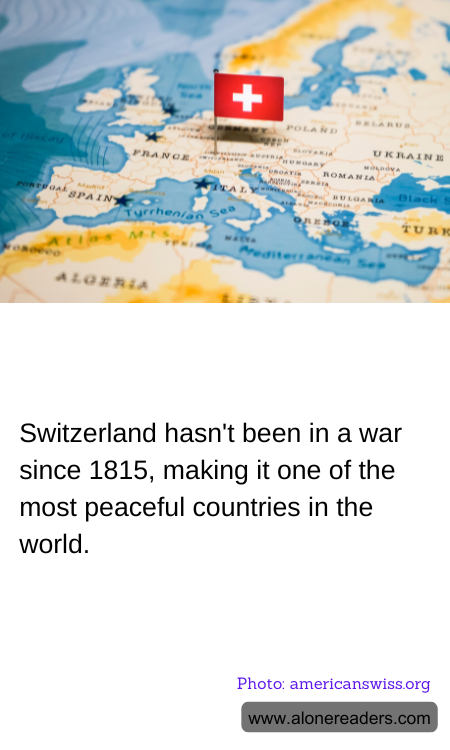
Switzerland, nestled in the heart of Europe, is renowned for its breathtaking landscapes, delicious chocolates, and precision watches. However, one of its most remarkable attributes is its long-standing commitment to peace. Since 1815, Switzerland has managed to avoid involvement in any military conflict, earning its reputation as one of the most peaceful countries in the world.
This enduring peace can be traced back to the Congress of Vienna in 1815, where European powers recognized Switzerland's neutrality. This status was not merely a diplomatic formality but a deeply ingrained principle that has shaped the country's foreign policy for over two centuries. Switzerland's neutrality means it does not participate in military alliances or conflicts, allowing it to focus on fostering diplomatic relations and humanitarian efforts.
The Swiss model of neutrality is not passive but rather a proactive stance that emphasizes diplomacy and dialogue. Switzerland has often played the role of mediator in international disputes, offering its services as a neutral ground for negotiations. The country is home to numerous international organizations, including the Red Cross and various United Nations agencies, further cementing its role as a hub for peace and cooperation.
Switzerland's commitment to peace is also reflected in its internal policies. The country operates a unique system of direct democracy, allowing citizens to have a direct say in political decisions through referendums. This system fosters a culture of consensus and cooperation, reducing internal conflicts and promoting social harmony. The Swiss education system also emphasizes the importance of peace and conflict resolution, instilling these values in future generations.
Economically, Switzerland benefits from its peaceful stance. The stability and predictability of a neutral country attract businesses and investors, contributing to a robust economy. The Swiss franc is considered a safe haven currency, and the country's banking sector is one of the most secure in the world. This economic prosperity, in turn, supports a high standard of living for its citizens, further reinforcing the nation's peaceful environment.
Switzerland's commitment to peace is not without challenges. In a world where geopolitical tensions are ever-present, maintaining neutrality requires careful navigation of international relations. However, Switzerland's consistent dedication to peace and neutrality serves as a powerful example of how a nation can thrive without resorting to military conflict.
In conclusion, Switzerland's long-standing peace since 1815 is a testament to the power of neutrality and diplomacy. By prioritizing dialogue over conflict and fostering a culture of consensus, Switzerland has created a stable and prosperous society. Its role as a mediator and host for international organizations highlights its commitment to global peace, making it a beacon of hope in a world often fraught with conflict.