More About This Card
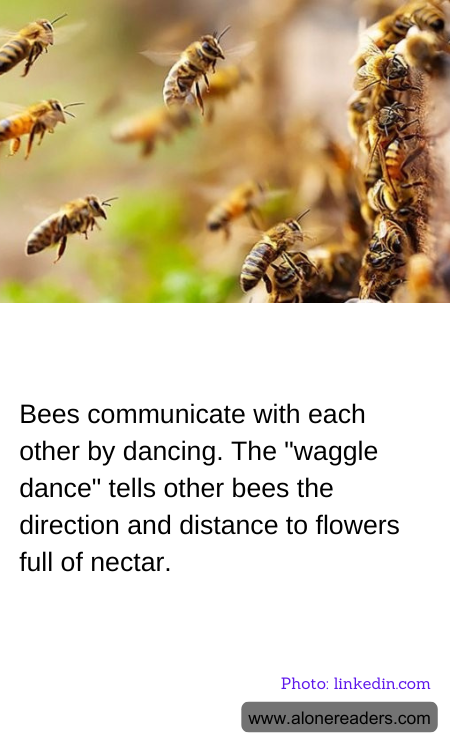
Bees, the tiny architects of nature, have long fascinated humans with their complex social structures and behaviors. Among their most intriguing behaviors is the "waggle dance," a sophisticated form of communication that allows bees to convey vital information about the location of food sources. This dance is not only a testament to the intelligence of these insects but also a crucial component of their survival strategy.
The waggle dance is performed by worker bees who have discovered a rich source of nectar. Upon returning to the hive, the bee performs a series of movements on the honeycomb that resemble a figure-eight pattern. The dance consists of two main parts: the waggle run and the return phase. During the waggle run, the bee moves forward while waggling its body from side to side. The angle of this run in relation to the vertical comb indicates the direction of the food source relative to the sun. For instance, if the bee waggles at a 60-degree angle to the right of the vertical, it means the flowers are located 60 degrees to the right of the sun's current position.
The duration of the waggle run is equally important, as it communicates the distance to the nectar source. A longer waggle run indicates a greater distance, while a shorter one suggests the flowers are nearby. This precise method of communication allows other bees in the hive to locate the food source efficiently, ensuring that the colony can gather the necessary resources to thrive.
The waggle dance is a remarkable example of non-verbal communication in the animal kingdom. It demonstrates how bees use a combination of movement, orientation, and timing to convey complex information. This dance is not only a means of sharing information but also a way to recruit other bees to join in the foraging effort. By observing the dance, other worker bees can quickly mobilize and head out to the indicated location, maximizing the colony's ability to collect nectar and pollen.
The discovery of the waggle dance has provided scientists with valuable insights into the cognitive abilities of bees. It challenges the notion that insects are simple creatures, revealing a level of sophistication in their behavior that rivals that of more complex animals. Moreover, understanding the waggle dance has implications for agriculture and ecology, as bees play a critical role in pollinating crops and maintaining biodiversity.
In a world where bee populations are under threat from various environmental pressures, appreciating the intricacies of their communication can inspire efforts to protect these vital pollinators. The waggle dance is a reminder of the delicate balance of nature and the incredible adaptations that have evolved to sustain life. As we continue to study and learn from bees, we gain a deeper appreciation for the interconnectedness of all living things and the importance of preserving the natural world.