More About This Card
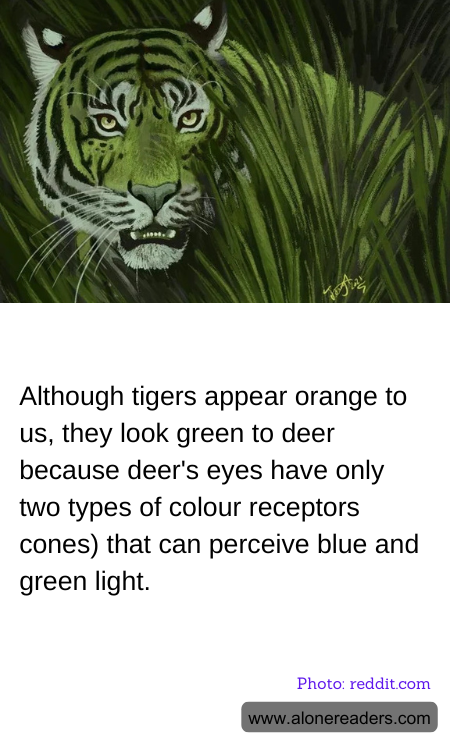
In the vibrant tapestry of the natural world, the tiger stands out as one of the most majestic and awe-inspiring creatures. With its striking orange coat adorned with bold black stripes, the tiger is a symbol of power and beauty. However, this iconic appearance is not perceived the same way by all creatures. To the deer, a primary prey of the tiger, this formidable predator does not appear in its fiery orange hue but rather in shades of green. This fascinating phenomenon is a result of the differences in the visual perception between humans and deer.
Humans have trichromatic vision, meaning our eyes contain three types of color receptors, or cones, that allow us to perceive a wide spectrum of colors, including red, blue, and green. This ability enables us to see the vibrant orange of the tiger's coat. In contrast, deer possess dichromatic vision, which means their eyes have only two types of cones that are sensitive to blue and green light. This limited color perception means that deer are unable to distinguish between colors that fall outside of their blue and green spectrum, such as red and orange.
For deer, the world is painted in shades of blue and green, and colors like orange blend into the green hues of their environment. This evolutionary adaptation is crucial for their survival, as it allows them to detect movement and shapes more effectively in their predominantly green habitats. The tiger's orange coat, which stands out so vividly to human eyes, becomes a form of camouflage in the eyes of the deer, blending seamlessly with the surrounding foliage and grasslands.
This natural camouflage is a testament to the intricate balance of predator-prey relationships in the wild. The tiger's ability to remain concealed from its prey is vital for its hunting success. By appearing green to deer, tigers can stealthily approach their prey without being easily detected. This advantage is crucial for a predator that relies on the element of surprise to capture its meals.
The interplay of color perception between predators and prey highlights the complexity and wonder of nature's design. It serves as a reminder of the diverse ways in which animals have evolved to adapt to their environments and the ongoing dance of survival that plays out in ecosystems around the world. While humans may marvel at the tiger's orange beauty, for the deer, it is a hidden threat lurking in the greenery, a testament to the power of perception in the animal kingdom.
Understanding these differences in perception not only enriches our appreciation of wildlife but also underscores the importance of preserving natural habitats. By protecting these environments, we ensure that the delicate balance of predator and prey continues to thrive, allowing future generations to witness the marvels of nature's adaptations.