More About This Card
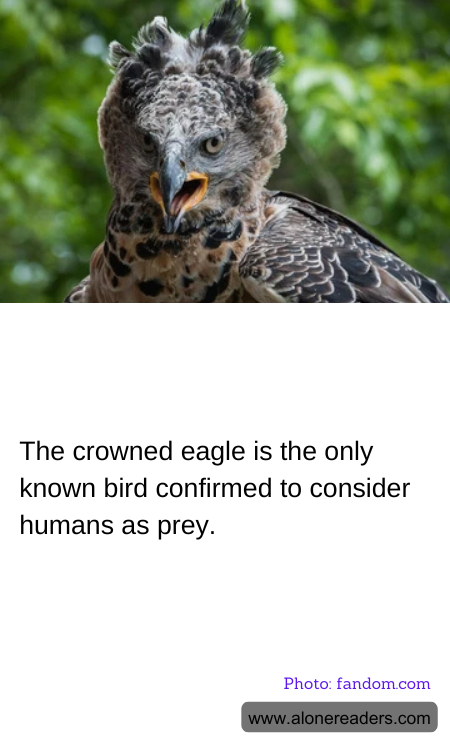
The crowned eagle, scientifically known as *Stephanoaetus coronatus*, is a formidable bird of prey that inhabits the dense forests of sub-Saharan Africa. Known for its striking appearance and powerful hunting abilities, this raptor has earned a unique and somewhat unsettling distinction in the avian world. It is the only bird known to have considered humans as prey, a fact that underscores its status as one of the most powerful eagles on the planet.
With a wingspan reaching up to 1.8 meters (about 6 feet) and talons that can exert a force of over 500 pounds per square inch, the crowned eagle is well-equipped for hunting. Its primary diet consists of medium-sized mammals such as monkeys, small antelopes, and hyraxes. However, historical accounts and some modern studies suggest that these eagles have occasionally targeted human children. This behavior is extremely rare and typically occurs in areas where their natural prey is scarce, forcing them to expand their hunting repertoire.
The crowned eagle's hunting prowess is matched by its striking appearance. It boasts a distinctive crest of feathers on its head, giving it a regal look that befits its name. Its plumage is a mix of dark brown and white, with a barred pattern on its underparts that provides excellent camouflage in the dappled light of the forest canopy. This camouflage, combined with its silent flight, makes it an efficient and stealthy predator.
Despite its fearsome reputation, the crowned eagle plays a crucial role in its ecosystem. As an apex predator, it helps maintain the balance of animal populations in its habitat, ensuring that no single species dominates the environment. This ecological role highlights the importance of conserving these magnificent birds, which face threats from habitat destruction and human encroachment.
Efforts to protect the crowned eagle are vital not only for preserving biodiversity but also for maintaining the health of the ecosystems they inhabit. Conservationists work to safeguard their habitats and educate local communities about the importance of these birds. By fostering coexistence between humans and wildlife, these initiatives aim to reduce the likelihood of negative interactions, such as those rare instances where crowned eagles have targeted humans.
In conclusion, while the crowned eagle's reputation as a potential threat to humans may seem alarming, it is essential to view this behavior in context. These birds are not inherently dangerous to people and typically avoid human contact. Understanding and respecting their role in the natural world can help ensure that both crowned eagles and humans can coexist peacefully. Through conservation efforts and increased awareness, we can appreciate the crowned eagle not as a threat, but as a vital and awe-inspiring part of our planet's biodiversity.